Cargo theft has become one of the costliest problems in logistics. Many losses don’t start with a break-in. They start at the gate, when someone with a fake ID or a stolen identity talks their way onto the property and drives off with freight that was never theirs to take.
Identity verification gives distribution centers a way to confirm who is actually standing at the guard shack before a door opens or a shipment is released. It adds accountability, reduces unauthorized entry, and gives security teams a reliable record when something goes wrong.
Why Identity Verification at Warehouses Matters for Freight Security
A warehouse is rarely used by employees alone. On any given day, a site may see:
- Truck drivers and couriers
- Contractors and vendors
- Temporary workers
- Inspectors
Many of them need to reach the yard, the loading dock, or the office. Organized theft crews know this. Instead of cutting a fence, they:
- Present a fraudulent driver’s license
- Claim to be the assigned carrier
- Leave with the freight
A single incident can mean $50,000 to $500,000+ in financial losses, plus insurance claims, chargebacks, and damaged relationships with shippers.
ID fraud is increasingly sophisticated, and a quick visual inspection at the window often isn’t enough to tell a legitimate driver from an impostor.
Badges Verify the Card, Not the Person: Why Fake ID Detection Matters
Most sites already have some form of entry control, and each plays a role. But none of them confirms identity:
| Entry control | What it records | What it can’t tell you |
| Sign-in sheet | Whatever name someone writes down | Whether that name is true |
| Badge | That someone is holding a card | Whether the card belongs to them |
| Gate | That a vehicle came through | Who was behind the wheel |
| Camera | What happened | Who did it |
Identity verification answers a basic question at the point of entry: is this person who they say they are?
How an ID Scanner Helps Verify Drivers and Pickup Personnel
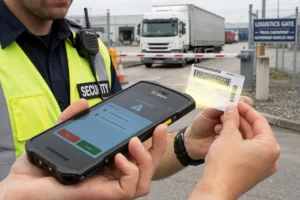
With an ID scanner at the guard shack or receiving window, the process takes seconds:
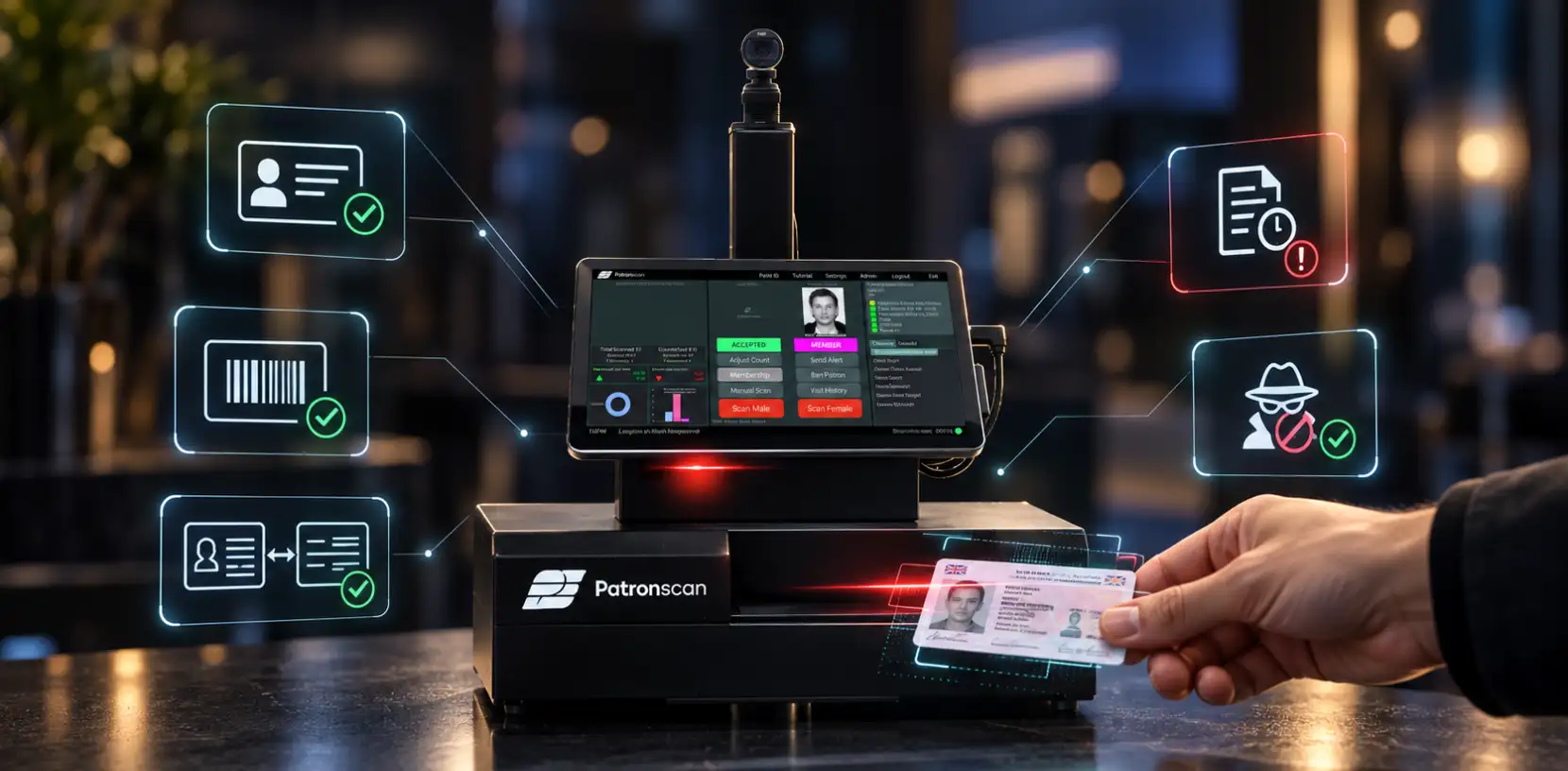
- Staff scan a driver’s license or CDL before releasing a shipment.
- The scan reads the data directly from the document.
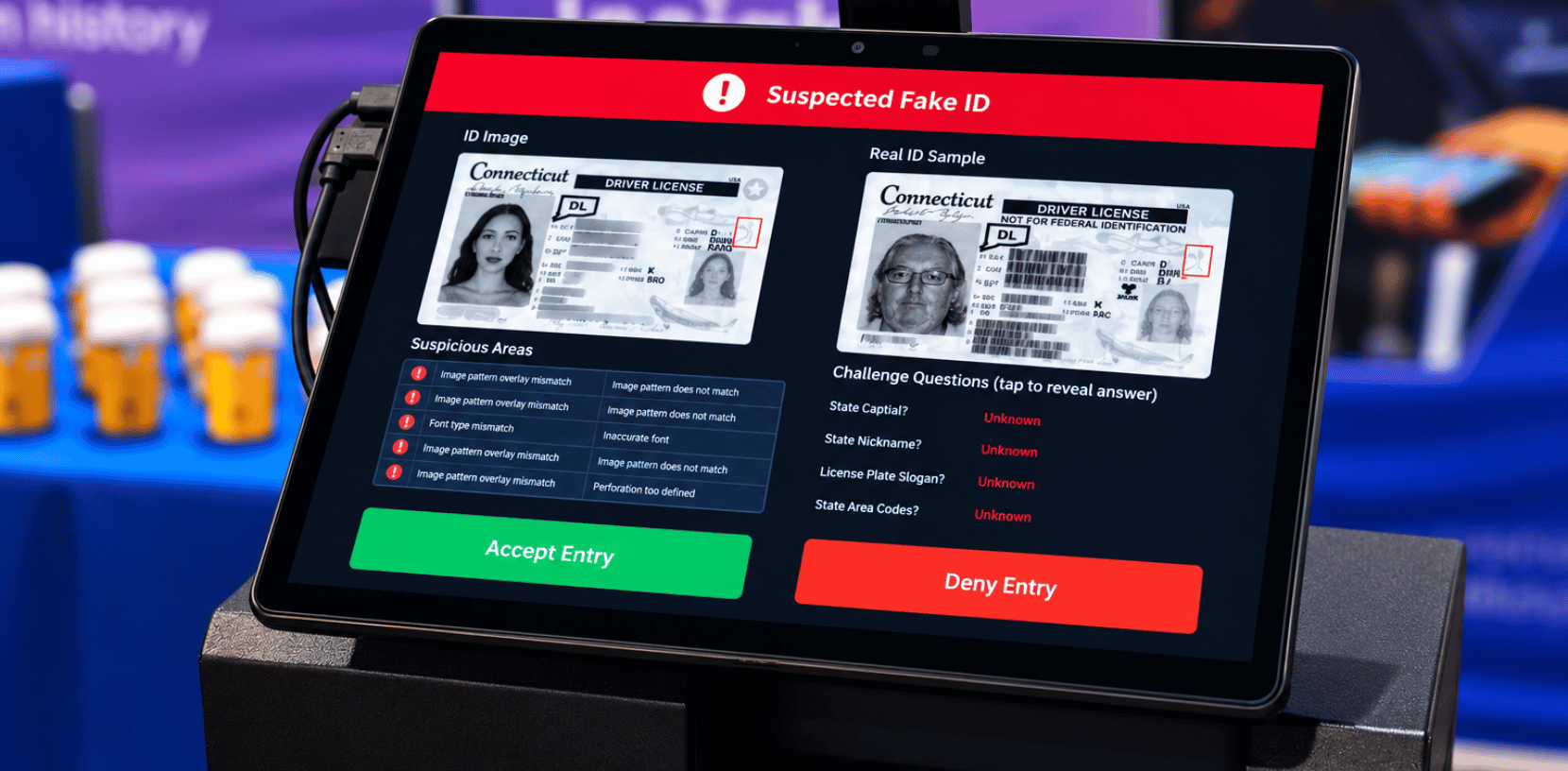
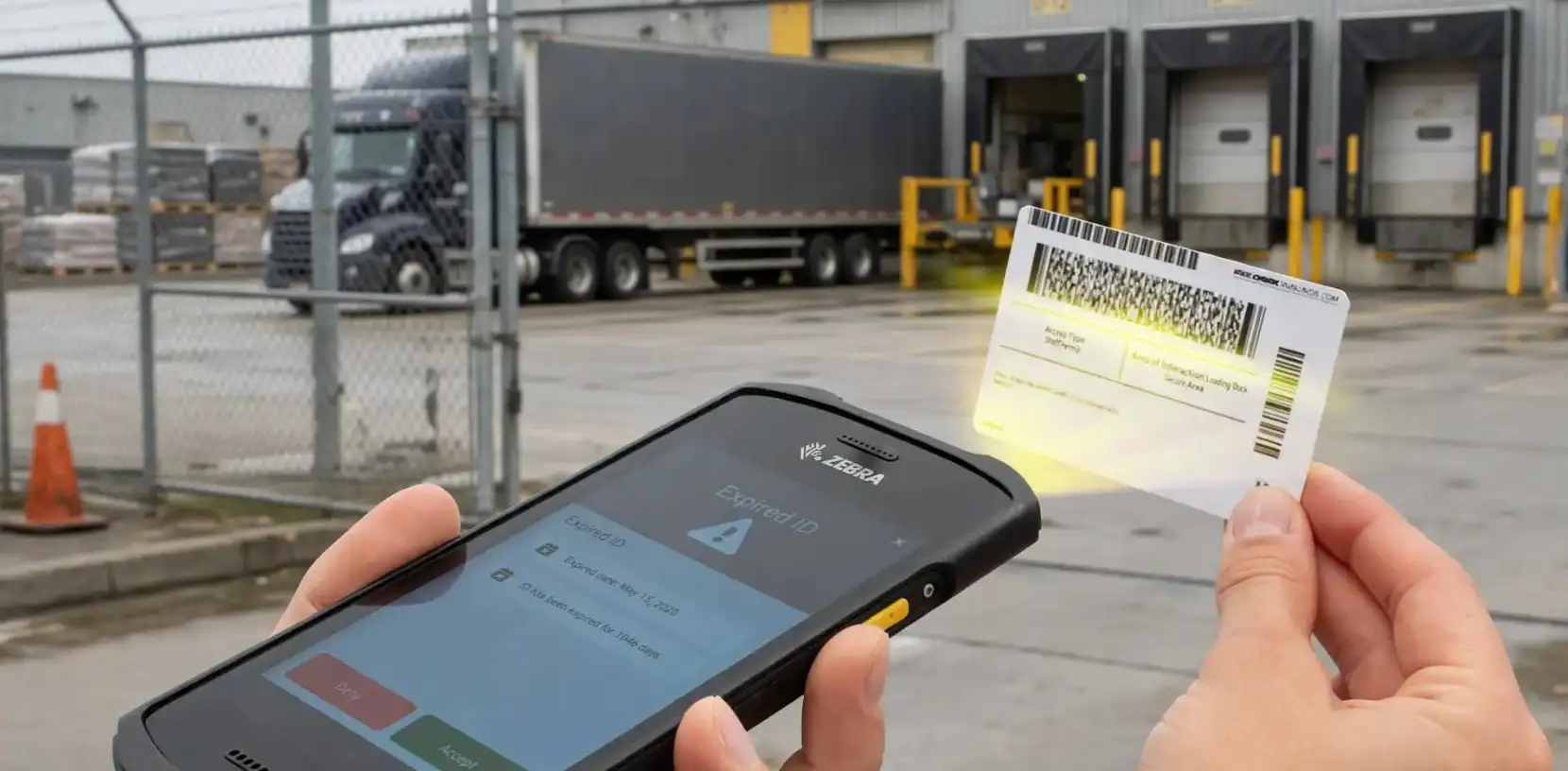
- Forensic verification tests the ID itself for signs it is expired, altered, or fake.
- The identity record is linked to the carrier, shipment, appointment, and vehicle, so you know exactly who picked up which load and when.
Patronscan’s forensic ID verification checks more than 8,500 data points across 14,000+ ID types, so detection of a high-quality fake ID doesn’t depend on how experienced the person at the window is.
Protect Every Entry Point With a Fixed Scanning Device
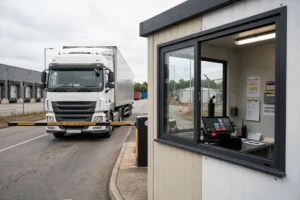
Not every facility has a guard on every gate around the clock. Two options cover the gaps:
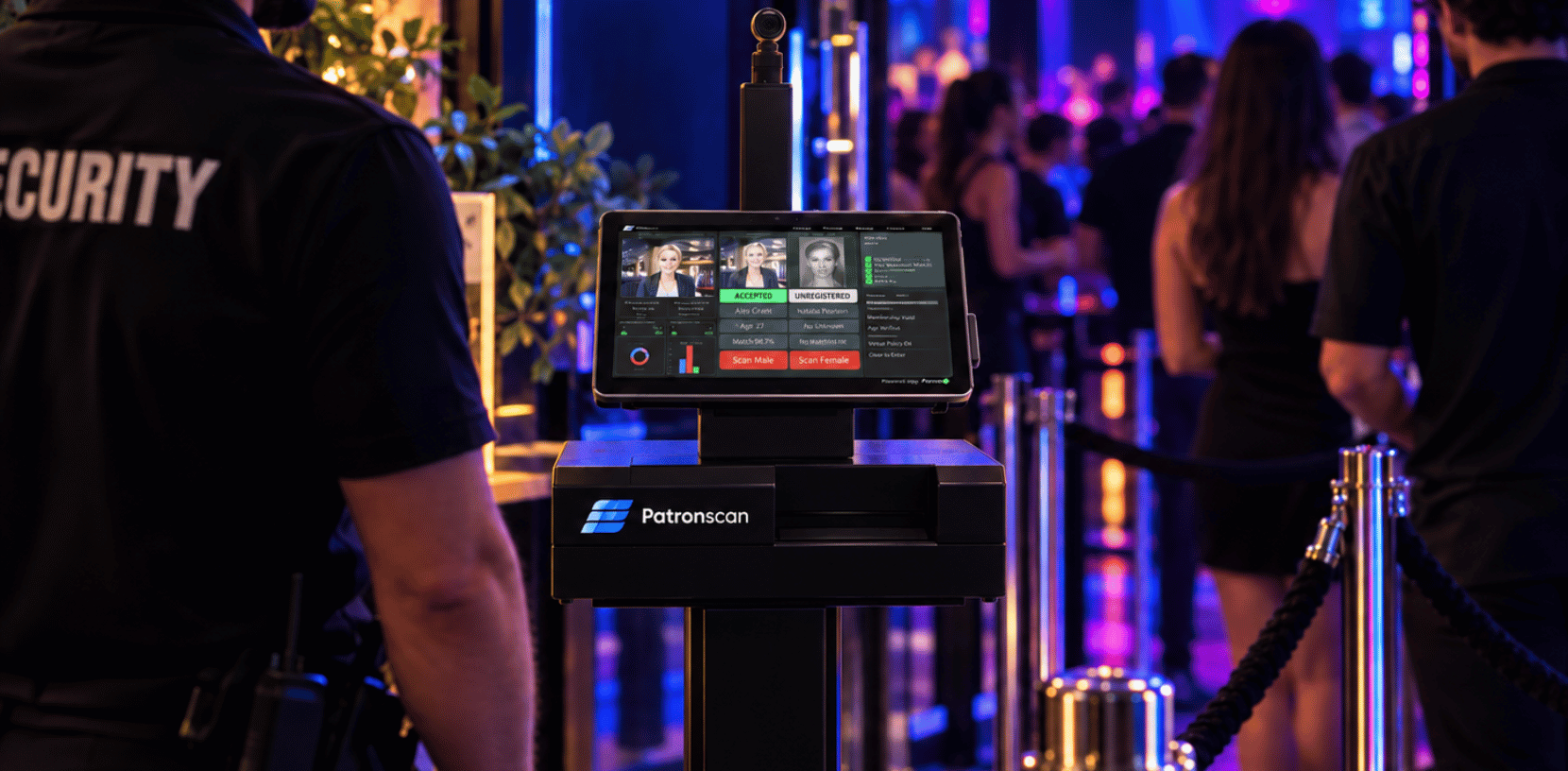
- Fixed kiosks: Unmanned units such as Patronscan’s IVAC wall-mount scanners verify identity at entry points and restricted zones 24/7 without adding headcount.
- Mobile handhelds: Yard staff verify drivers wherever trucks stop.
Combined with gates and doors, this gives you tighter access control: only authorized people get past the first gate, and anyone flagged as a problem is stopped before they reach your freight.
Stop Repeat Offenders Across Your Logistics Network
Thieves rarely hit just one location. Someone turned away at one of your distribution centers may try another the next week. A private flagged network closes that gap:
- A person flagged at one site is automatically flagged across every location in your organization.
- That knowledge doesn’t stay with one guard on one shift.
- Patronscan customers have seen theft reductions of up to 97% at high-shrink locations.
Build an Audit Trail for Legal and Insurance Needs
Every scan creates a timestamped identity record. If inventory goes missing, investigators can see exactly who was present and when. That record supports:
- Police reports
- Legal action
- Conversations with insurers
- Real data for leadership on who is coming and going
Keep Operations Moving: Faster Entry for New Workers
Security needs to work at the speed of the operation. Manual entry falls short in a few ways:
- Typing names into a log slows down busy periods.
- Handwritten or typed details invite errors.
- New hires and seasonal staff make manual checks unreliable during peak season.
Reading the ID automatically captures details in seconds, which keeps trucks rolling.
The Standard to Look for in an Identity Verification Solution for Your Business
| Feature | Question to ask |
| Speed | How quickly can each driver be processed at the gate? |
| Forensic analysis | Does it simply read the ID, or can it spot fake and altered documents? |
| Flagging | Can it alert staff, and every site, when someone is flagged? |
| Records and reporting | Can you see who entered, when, and which load they collected? |
| Privacy and compliance | Does it collect only what’s needed and meet legal requirements where you operate? |
| Integration | Can it connect to gates, doors, and your existing systems? |
| Ease of use | Can any staff member use it with minimal training? |
The best option isn’t the one with the most features. It’s the one that fits your risk, traffic, and workflows.
Identity Verification Is One Layer of Warehouse Security
No single tool secures a warehouse on its own. Cameras, alarms, gates, inventory controls, and trained staff all play a role, and you’ll still rely on them. Verifying ID adds the missing piece: confidence about who is on your property.
For logistics teams handling high-value freight, that confidence helps stop losses before they leave the yard. To see how it works at a guard shack like yours, book a Patronscan demo.