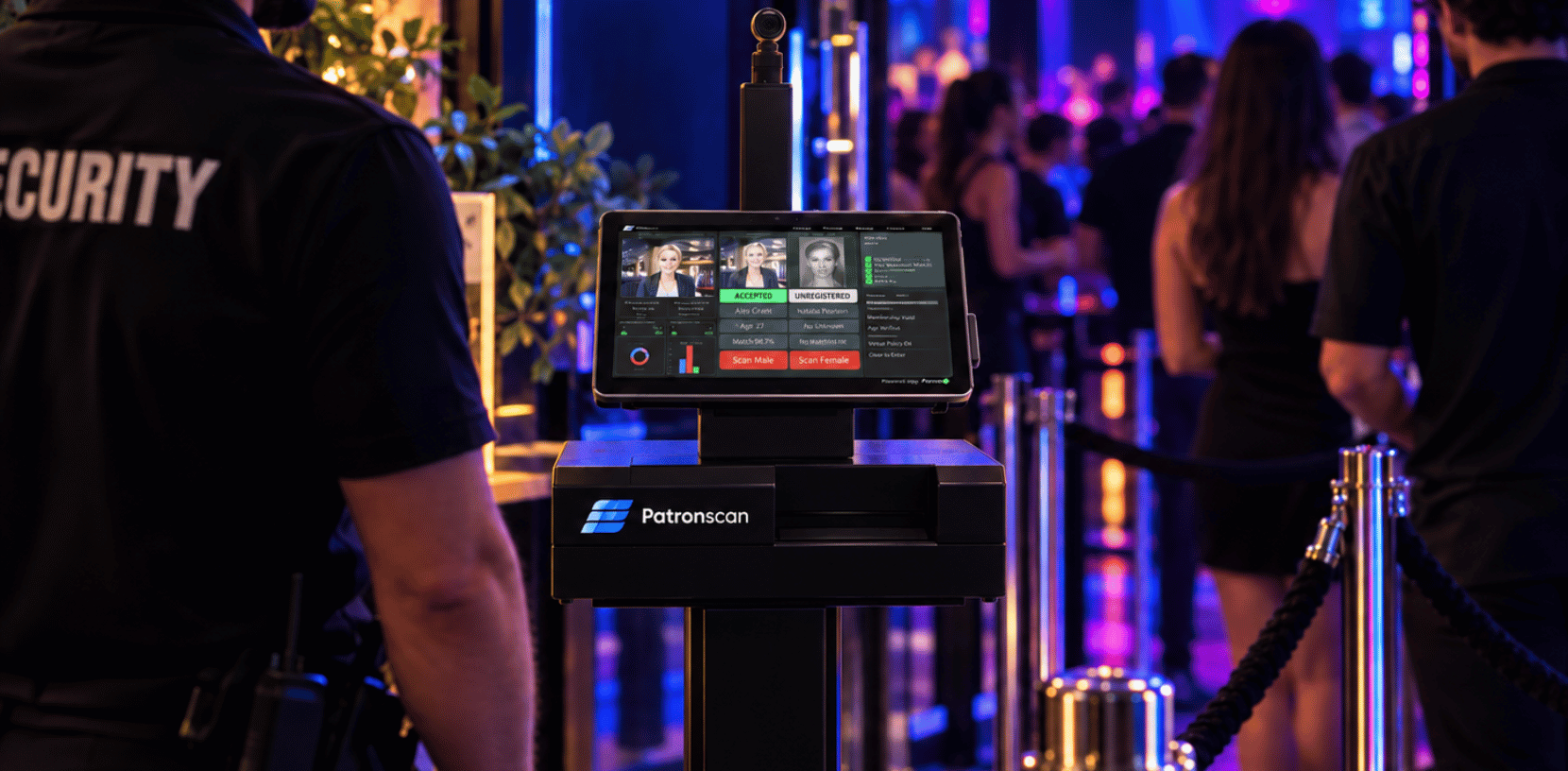
Most modern scanners read passports as well as driver’s licenses and state or provincial IDs. Ask vendors which international documents they support before you buy.

ID verification is one part of a casino’s larger security program. A casino ID scanner can instantly confirm who is entering, verify age at the door, flag players who may need extra review, detect sophisticated fake IDs, ensure regulatory compliance with gaming boards and Anti-Money Laundering (AML) standards, and create a reliable record if an incident occurs.
It does not replace security officers, cameras, access controls, or other safety tools. Instead, it adds another layer of information so casino teams can make better, faster decisions.
How ID Verification Fits Into Casino Security
Casinos are complex environments. They may operate 24 hours a day, handle large amounts of cash, serve alcohol, and welcome thousands of patrons through their doors.
Because of this, protection usually depends on several tools working together. No single tool can cover every risk, so each layer is designed to catch what the others might miss.
| Security Layer | Primary Role | Core Question Answered |
| Surveillance Cameras | Watch the floor, cages, and entrances | What is happening? |
| Security Officers | Respond to incidents and de-escalate | Who can step in right now? |
| Access Control | Limit entry to restricted areas | Which doors can this credential open? |
| Alarm Systems | Alert teams to breaches or emergencies | Is something wrong? |
| Cash-Handling Procedures | Protect money as it moves | Is every dollar accounted for? |
| Staff Training | Prepare employees for real situations | Does the team know what to do? |
| ID Verification | Confirm identity and eligibility | Who is this person, and should they be here? |
Each tool has a different job. Cameras show what is happening. Officers respond to problems. Access controls limit entry to certain areas. ID scanning answers a basic but important question: who is this person, and should they be on the casino floor?
Key Functions of Casino ID Verification Systems
1. Instant Age Verification and Fake ID Detection
One of the most common uses of ID verification in a casino is confirming that a guest meets the legal age requirement.Depending on the jurisdiction and the type of gaming, the minimum age is often 18 or 21. Allowing underage gambling can lead to fines, mandatory reviews, and in serious cases, license revocation.
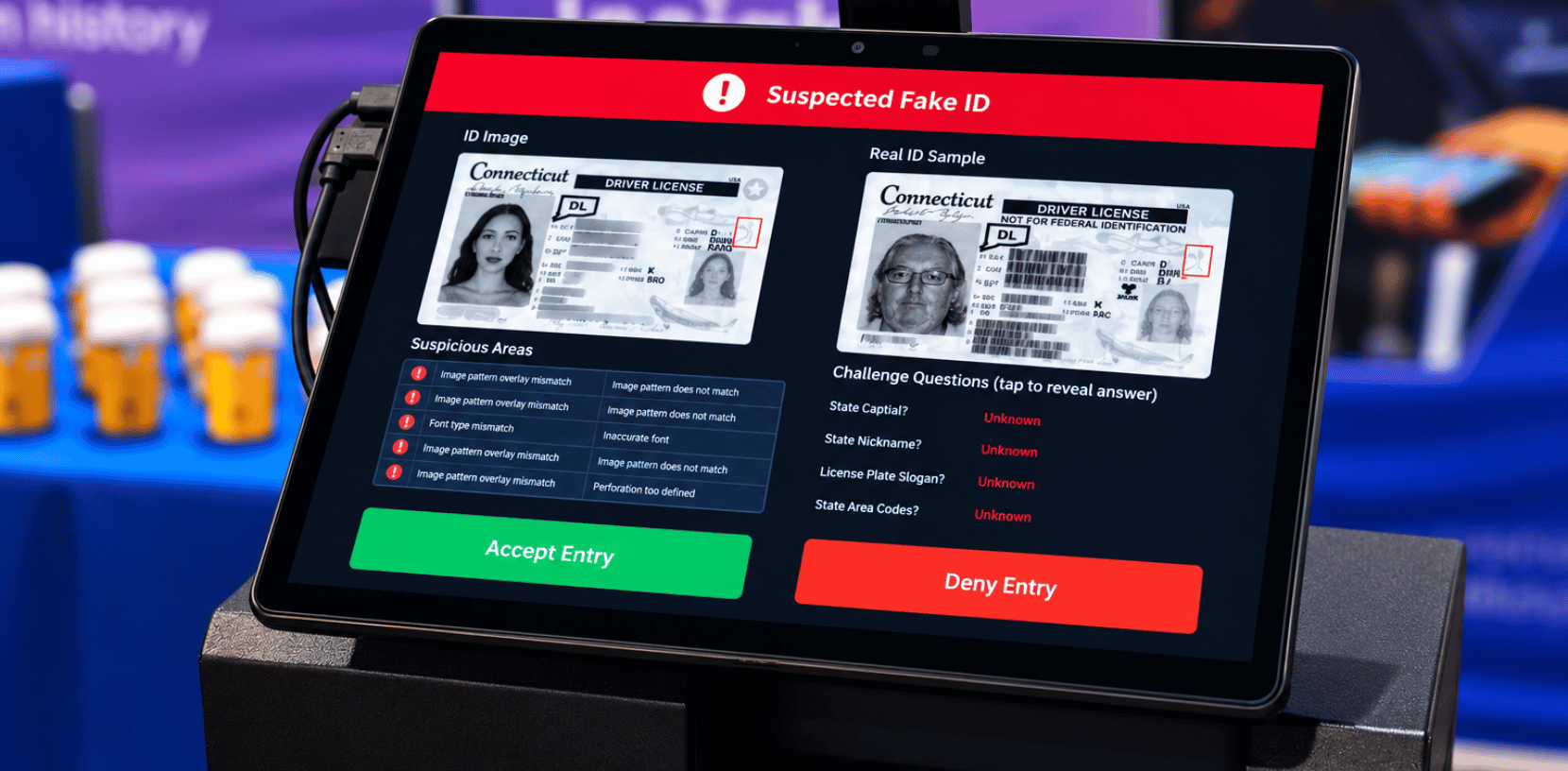
A scanner reads the information on a government-issued ID or passport and checks whether the document appears legitimate. Advanced ID scanners also run additional validation designed to detect fake IDs and altered documents.
What a scan can catch that a quick visual look may miss:
- Whether the date of birth meets the age requirement
- Whether the ID is expired
- Whether the barcode data matches the printed information
- Whether the document’s format and security features match the issuing jurisdiction
Instead of relying only on a quick look, door personnel have a tool that can verify age instantly and consistently.
The scanner does not make every decision for the employee. Staff still need proper training and clear procedures for situations where an ID cannot be verified.
2. Responsible Gaming: Flagging Self-Excluded Players at Every Location
Casinos may also use identity information to support responsible gaming programs. To meet state and regional gaming regulations, casino operators must enforce self-exclusion programs. A gambler may choose to join a self-exclusion program that restricts them from entering or playing at participating locations. Depending on local rules and the tools in place, ID scanning can flag a self-excluded player who appears on an exclusion list.
Relying on staff memory or physical binders to recognize thousands of self-excluded individuals is inefficient and prone to human error.
This can be especially useful in busy environments where security teams may be responsible for recognizing a large number of people.
A clear self-exclusion procedure should cover:
- How the guest’s identity is checked at entry
- Who is alerted automatically when a match is found
- How staff approach the guest respectfully and privately
- How the interaction is documented
- How the list is updated and kept in sync across locations
Technology such as Patronscan can help surface the information, but the The casino still needs policies to effectively manage state regulations that explain what employees should do when a match is found with the security code.
3. Check Patrons and Players Against Ban Lists
Casinos may have their own lists of people who are not permitted on the property. These restrictions could result from previous incidents, fraud concerns, threats, or other security issues.
A casino ID scanner system can help compare a scanned identity against an approved internal list or watchlist. If there is a match, designated managers can be alerted instantly and follow the casino’s procedures.
This can be more reliable than expecting employees to recognize every restricted person by sight.
4. Track Incidents and Support Investigations With ID Scans
Identity verification can also provide useful information after an incident, or for chargebacks.
If a casino needs to investigate a dispute, theft, fraud concern, or security event, knowing which verified guests were present may help the team understand what happened. That information can be reviewed alongside surveillance footage, staff reports, transaction records, and other evidence.
Not every case can be solved through an ID scan. But being able to track who entered, and when, adds one more piece of evidence when working with regulators, insurers, or law enforcement.
5. Restricted-Area Protection: Identity Verification for Staff
ID verification is not limited to customers.
Licensed casinos may also need to verify employees, contractors, vendors, or visitors before allowing access to restricted areas. In these cases, identity verification can work alongside badges, access cards, or electronic door systems.
The goal is to ensure the person using an access credential is the person who is supposed to have it. A badge confirms that a card is valid; it does not confirm who is holding it.
This matters most in areas such as cash cages and count rooms, slot machine and gaming equipment storage, surveillance and IT rooms, offices holding sensitive records, and VIP areas.
6. Fake ID Detection and Fraud Prevention
Casinos can be targets for different types of fraud. A person may try to use a fake ID, a real ID borrowed from someone else, an altered document, or a stolen identity to claim winnings or sign up for a loyalty program.
ID verification can help staff identify documents that require a closer look. Some systems can check the information stored in an ID barcode, examine security features, or use additional verification methods.
No technology can catch every fake or fraudulent document. Casinos should treat ID scanning as one part of a broader fraud prevention program.
Consistent ID Scans at Every Casino Entrance and Location
One of the biggest benefits of ID verification is consistency.
Without technology, one employee may inspect an ID differently than another. A busy night, poor lighting, limited training, or a difficult-to-read document can also affect the process.
A well-designed scanner gives employees a standard process to follow. The same fast, accurate checks are performed each time, while unusual situations are sent to trained managers for review.
This makes procedures easier to teach, follow, and maintain across every entrance and every property, and it can improve the guest experience by keeping lines moving.
Privacy and Compliance: How to Protect Customer Data
Casinos should also consider privacy when choosing an ID verification system.
An ID contains personal data, so operators should understand exactly how that data is handled. Requirements vary by location, so casinos need to make sure their policies and technology are compliant with the laws that apply to them.
Privacy questions to ask before choosing a system:
- What information does the system collect?
- Where is the data stored, and is it encrypted or kept in the cloud?
- Where is the data stored, and is it encrypted?
- How long is it kept, and how is it deleted?
- Who can access it, and is that access logged?
- How are guests informed about the scanning?
Collecting more data is not always better. Strong compliance means balancing useful identity checks with appropriate privacy protection.
How to Choose the Right Casino ID Verification Solution or Device
The right solution depends on how and where it will be used. A casino that needs to verify age at a busy entrance may have different needs than one using ID scanning for employee access or responsible gaming.
| Area to evaluate | Questions to ask |
| Speed | Can it process players instantly during peak hours? |
| ID coverage | Does it support out-of-state, international, and passport IDs? |
| Fake ID detection | How does it detect altered or counterfeit documents? |
| Watchlists | Can it check self-exclusion and internal ban lists automatically? |
| Alerts | Are instant alerts sent on a match, and to whom? |
| Integration | Does it connect with existing security tools and access control? |
| Offline operation | What happens when the internet is unavailable? |
| Multi-location | Can lists sync across properties so you can track flagged patrons? |
| Privacy controls | Can data retention and access be configured to meet local laws? |
| Reporting | Can teams pull records for investigations and audits? |
| Training and support | How long does setup take, and what support is offered? |
| Hardware options | Are there fixed and handheld devices for different areas? |
| Service | What setup, training, and ongoing support are offered? |
Casinos should also consider employee training, support, reliability, privacy controls, reporting, and how easily the technology fits into the existing security process.
Casino ID Scanner FAQ
No. A scanner gives your team faster, more consistent information, but staff still handle exceptions, approach flagged patrons, and make the final call. It creates a consistent age check and a timestamped record of each entry, which helps show regulators that age and exclusion rules are being followed. Many solutions let operators share flagged lists across properties, so a patron banned at one location can be flagged at the others, where local rules allow. Avoid launching without clear procedures, staff training, and privacy policies. Ask the vendor what service and support they provide during setup.
Does ID scanning replace door staff?
How does ID scanning help casinos stay compliant?
Can ban and exclusion lists sync across multiple casinos?
What should a casino avoid when rolling out ID scanning?
ID Verification Is One Layer of a Stronger Security Program
ID verification works best when it supports people and systems that are already in place.
It can verify age, flag self-excluded players, identify banned patrons, control access, document incidents, and reduce certain types of fraud. But it should not be treated as a complete solution on its own.
For casinos, the goal is to build layers of protection that work together. ID scanning provides one of those layers by giving teams better information about who is entering the property, so the business can avoid costly mistakes and maintain a safe, secure environment.
Want to see how ID scanning could fit into your casino? Explore Patronscan for casinos or book a quick demo with our team.