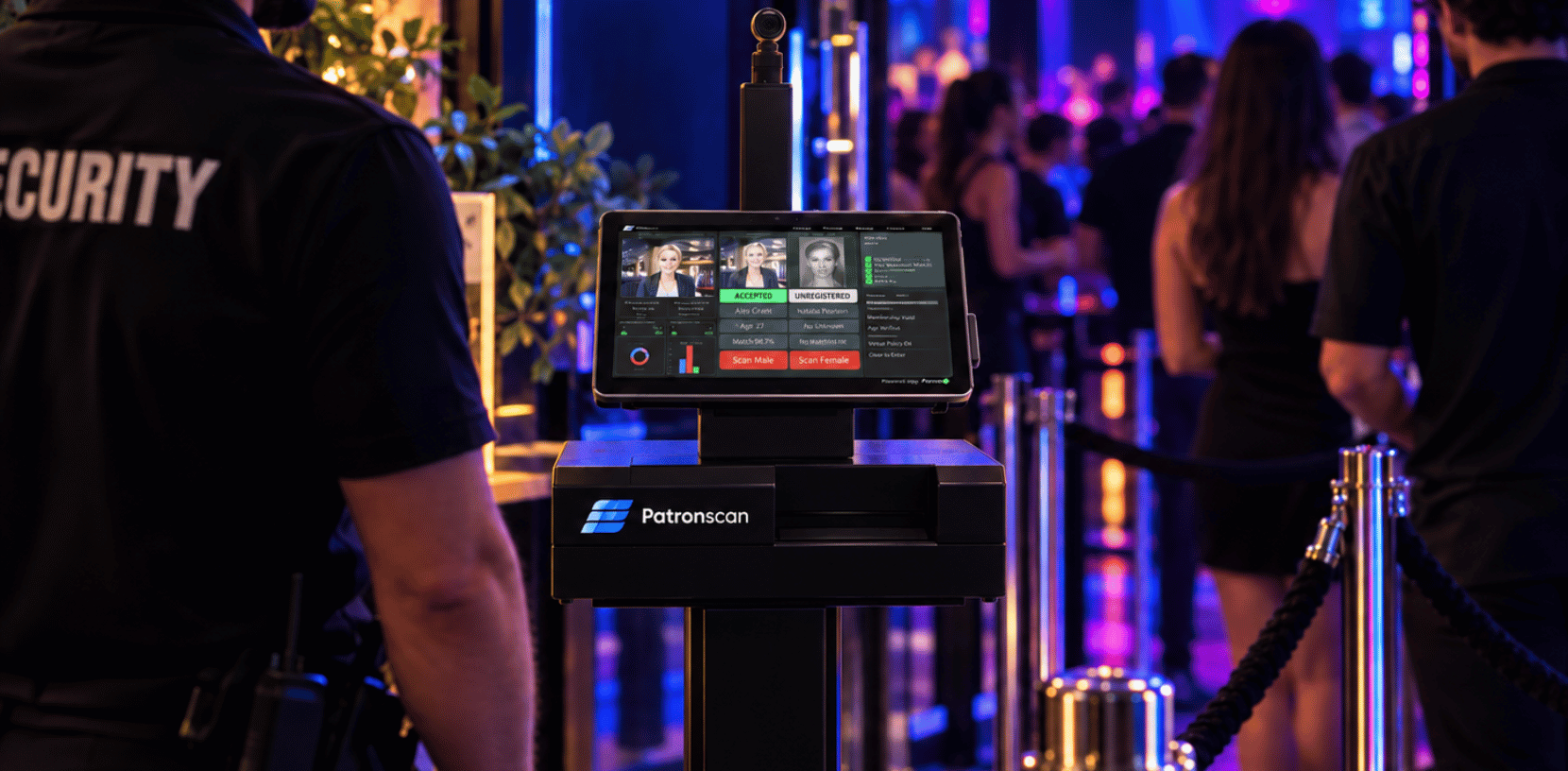
Forensic ID scanning is an advanced form of ID verification used to verify whether an identification document is real. Instead of only reading the information printed or stored on a card, a forensic ID scanner looks for signs that the document has been altered, copied, or built to look genuine.
That matters because a well-made fake ID can pass a basic scan. For any business that serves alcohol, sells restricted products, or hands over high-value items, a forensic check adds advanced fake ID detection that a traditional barcode reader and the human eye can’t match.
How Is Forensic ID Scanning Different From Standard ID Scanning?
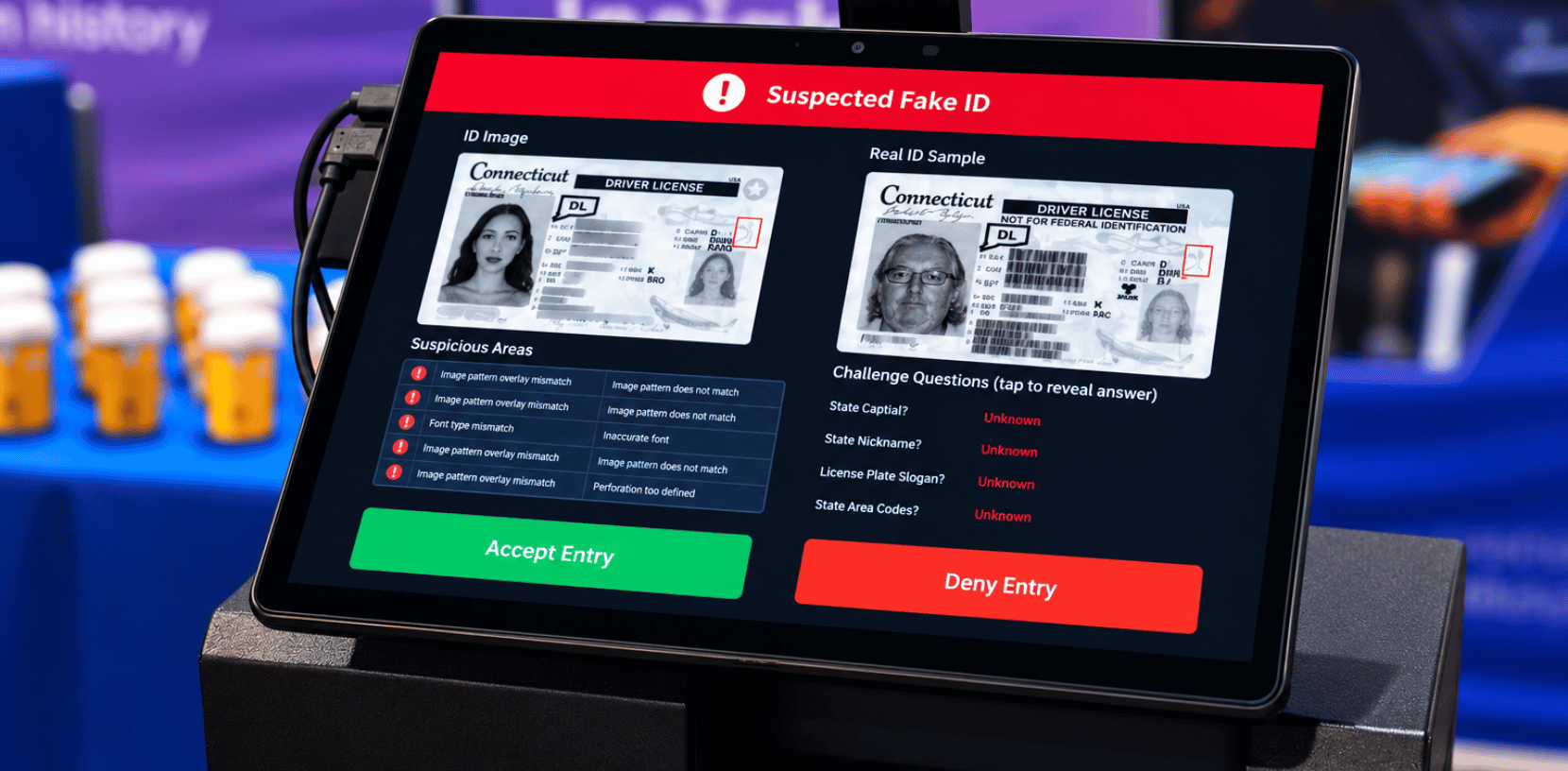
A forensic approach goes further than a standard ID reader. It tests the card itself against the known design features and layout of a properly issued document, so it can flag counterfeit IDs, tampered IDs, and expired IDs before anyone gets through.
A standard ID scanner reads the barcode or machine-readable zone on a license and pulls out details like name, date of birth, and ID number. That data is useful for calculating age and speeding up entry, but reading data doesn’t prove the physical card is authentic.
Many fake IDs carry a barcode that matches the printed information. If the tool only confirms the data can be read, the fake looks valid.
What Does a Fake ID Scanner Look For? Inside Forensic Detection
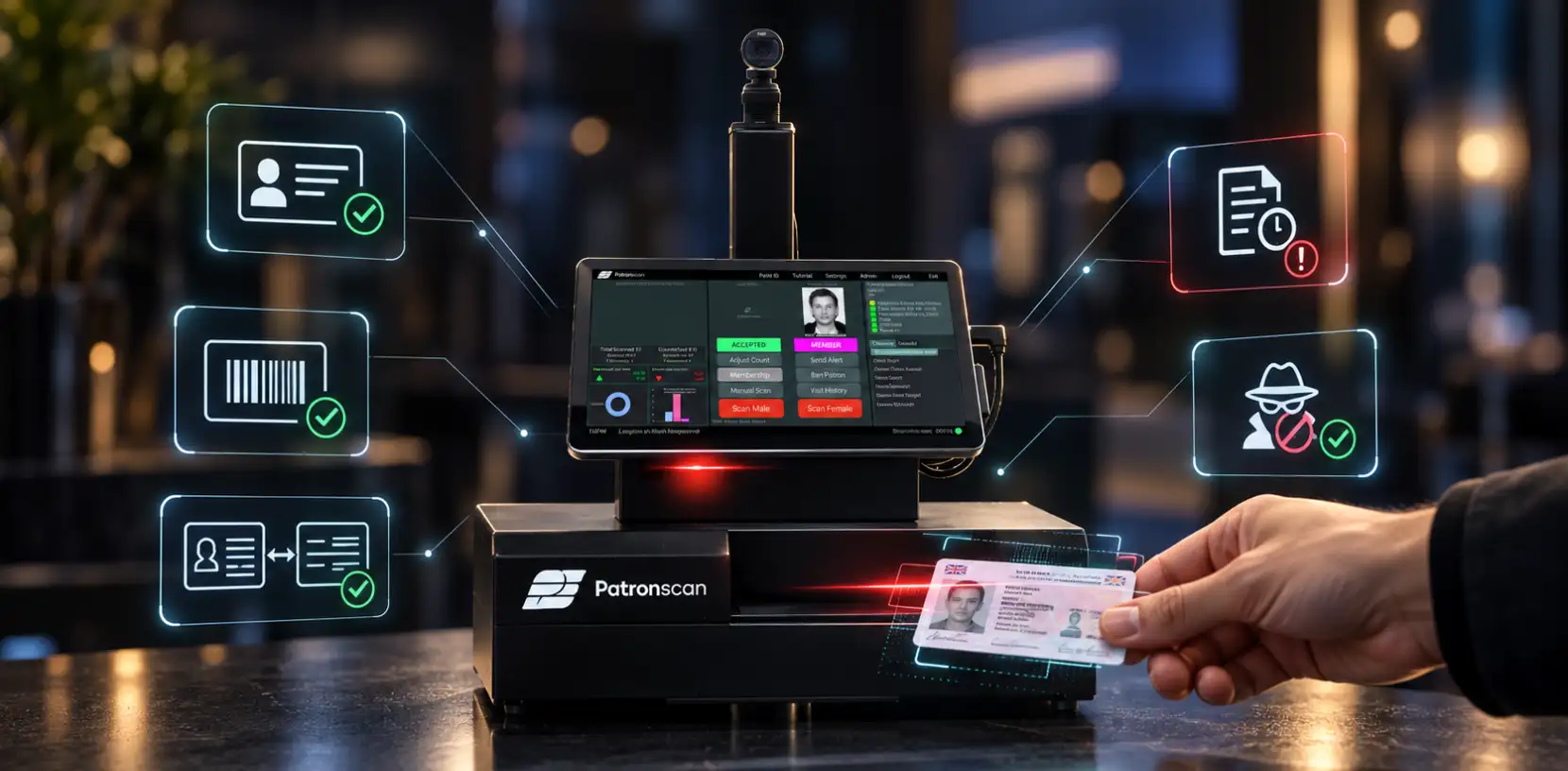
The exact tests depend on the scanner and the document type. Patronscan, for example, analyzes more than 8,500 data points across 14,000+ ID types, including driver’s licenses from all 50 states. Patronscan checks ID’s under white, UV and IR light, then runs hologram, watermark and font checks, image comparison, 2D barcode reading and OCR-based front/back matching, with machine learning tying it all together to catch fakes the human eye would miss. On every scan, it can look at:
- How information is formatted and structured on the card
- Whether expected anti-fraud features are present
- Whether data on the front matches data in the barcode
- Signs the document has been altered
- Errors in the barcode or encoded data
- Patterns that don’t match a properly issued ID
- Known traits of counterfeit and fraudulent IDs
The goal is detection of problems a person simply can’t see at a glance.
Why Are Fake IDs So Hard to Identify at the Door?
Fake IDs have become far more convincing. Many are professionally printed and look almost identical to a real government-issued card.
Door staff can catch obvious problems like a mismatched photo, wrong colours, or damaged printing. A high-quality fake is much harder to spot during a busy shift, especially when the line is out the door.
This is a real-world challenge in bars, lounges, casinos, and other venues where staff may process hundreds or thousands of guests a night. Technology gives them an active second opinion on every ID.
Does Forensic ID Scanning Replace Staff Verification?
No technology removes every risk. It surfaces warning signs and gives a far more robust result than simply reading an ID, but it works best as part of a broader process.
Staff should still compare the photo to the person, watch for unusual behaviour, and ask for a second piece of ID when something feels off. Technology should support good staff judgment, not replace it.
Why Forensic ID Scanning Matters for Compliance and Liability
Manual ID checks can vary from one employee to another. Experience, training, lighting, and busy shifts can all affect whether a fake or altered ID is detected.
Forensic ID scanning adds a consistent layer of protection by applying the same automated checks to every ID. This can help businesses:
- Detect fake and altered IDs using forensic document checks rather than relying only on visual inspection.
- Apply consistent ID verification across employees, shifts, entrances, and locations.
- Create a timestamped record of each scan to document when an ID was checked.
- Support compliance efforts by showing that reasonable steps were taken to verify age and identity.
- Reduce liability risk for businesses that need to prevent underage entry or restricted transactions.
- Scale ID verification across multiple locations without relying entirely on individual employee judgment.
For licensed venues, consistent ID scanning and recordkeeping can be especially valuable for demonstrating compliance with applicable liquor laws and protecting the business and its license.
Where Is Forensic ID Scanning Used for Age and Identity Checks?
Forensic ID scanning is useful anywhere a business needs confidence in who a customer is or how old they are.
Common use cases include:
- Bars and nightclubs — Verify age, detect fake IDs, and help prevent underage entry.
- Casinos — Verify customer identity and age as part of entry and compliance procedures.
- Convenience and liquor stores — Verify age before restricted purchases and identify suspicious IDs.
- Retail businesses — Confirm identity for returns, restricted products, or other transactions.
- Logistics and secured facilities — Verify the identity of customers, visitors, or authorized personnel.
- Car dealerships — Confirm a customer’s identity and driver’s license before a test drive.
The level of protection you need depends on your risk. A shop that only needs a quick age calculation has different needs from a nightclub regularly dealing with sophisticated fakes.
Choosing a Fake ID Scanner Tool for Your Business
Not every ID scanner performs the same level of verification. When comparing options, ask what the scanner actually tests. “Verification” means different things to different providers. Some only read barcode data; others run forensic tests built to catch counterfeit or altered documents.
Consider these factors:
- Fake ID detection: Does the scanner perform forensic checks designed to identify counterfeit, altered, or suspicious documents?
- Age verification: Can it accurately determine whether a customer meets the required age?
- Document coverage: How many ID and document types does the system support, and how often are new document designs added?
- Automated checks: Are security checks performed automatically on every scan?
- Scanning speed: Can employees verify IDs quickly without creating long lines?
- Records and reporting: Does the system create searchable, timestamped records of ID scans?
- Privacy and data controls: Can the business control how customer information is collected, stored, and accessed?
- Integration: Does the scanner work with your existing entry, access control, or business systems?
- Updates and support: Does the provider continuously update the system as new ID designs and fraud techniques emerge?
- Scalability: Can the solution support one location or multiple businesses and entrances?
Patronscan combines ID scanning, age verification, fake ID detection, access control, and cloud-based management in one platform. Explore Patronscan’s ID verification solutions and ID scanners to take a closer look at how forensic ID scanning works in real-world businesses.
The Bottom Line: Add a Layer of Security With Forensic ID Scanning
Forensic ID scanning looks deeper than a basic read. It checks an ID for signs that it is fake, altered, or incorrectly produced.
For any business where fake IDs create real risk, a forensic ID scanner adds a layer of protection that helps staff catch fake IDs faster and make more consistent decisions.