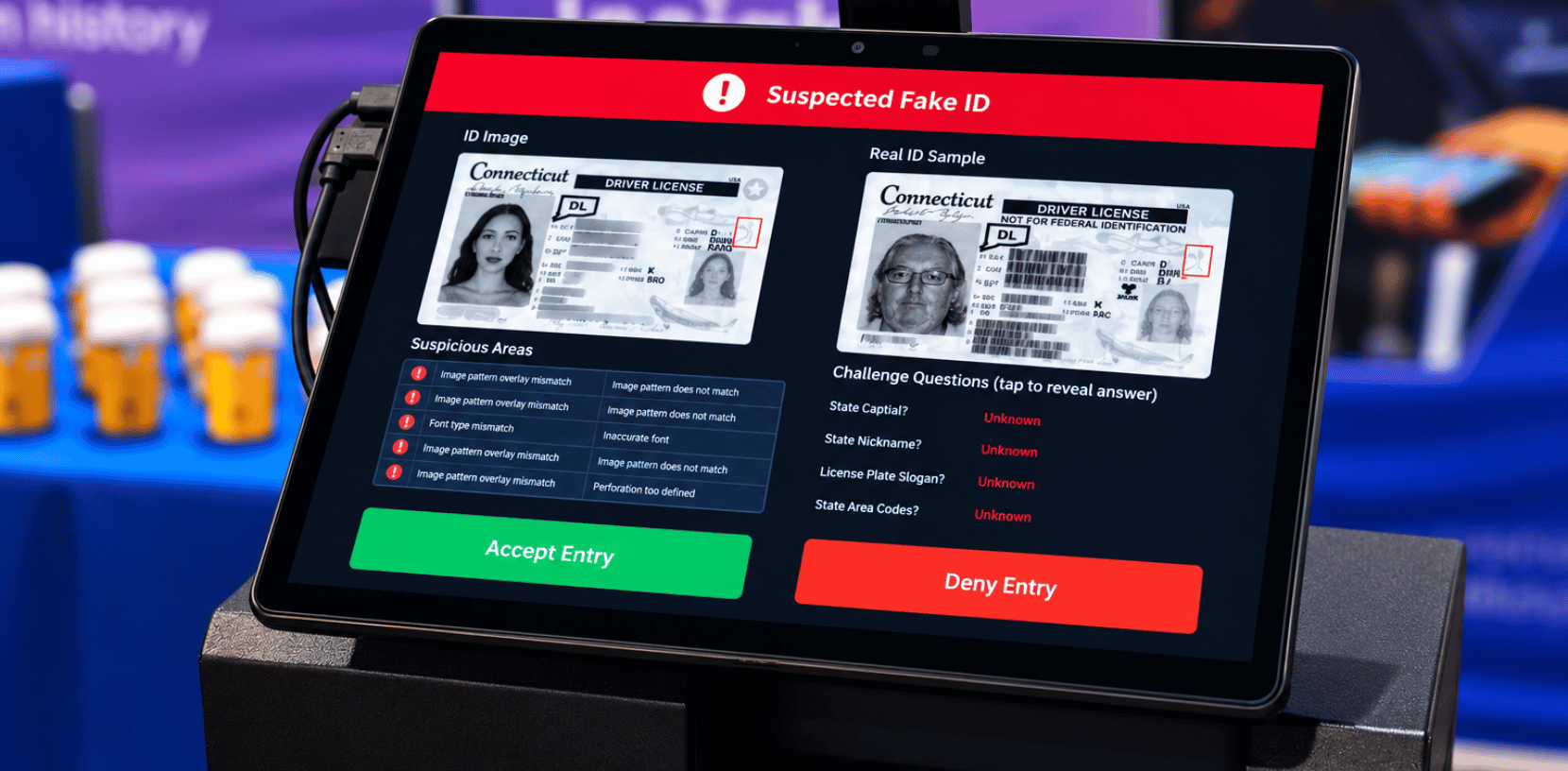
No. An ID scanner is a tool designed to support door staff by providing identification data and other relevant information. The final decision to grant or deny access always rests with trained venue personnel.
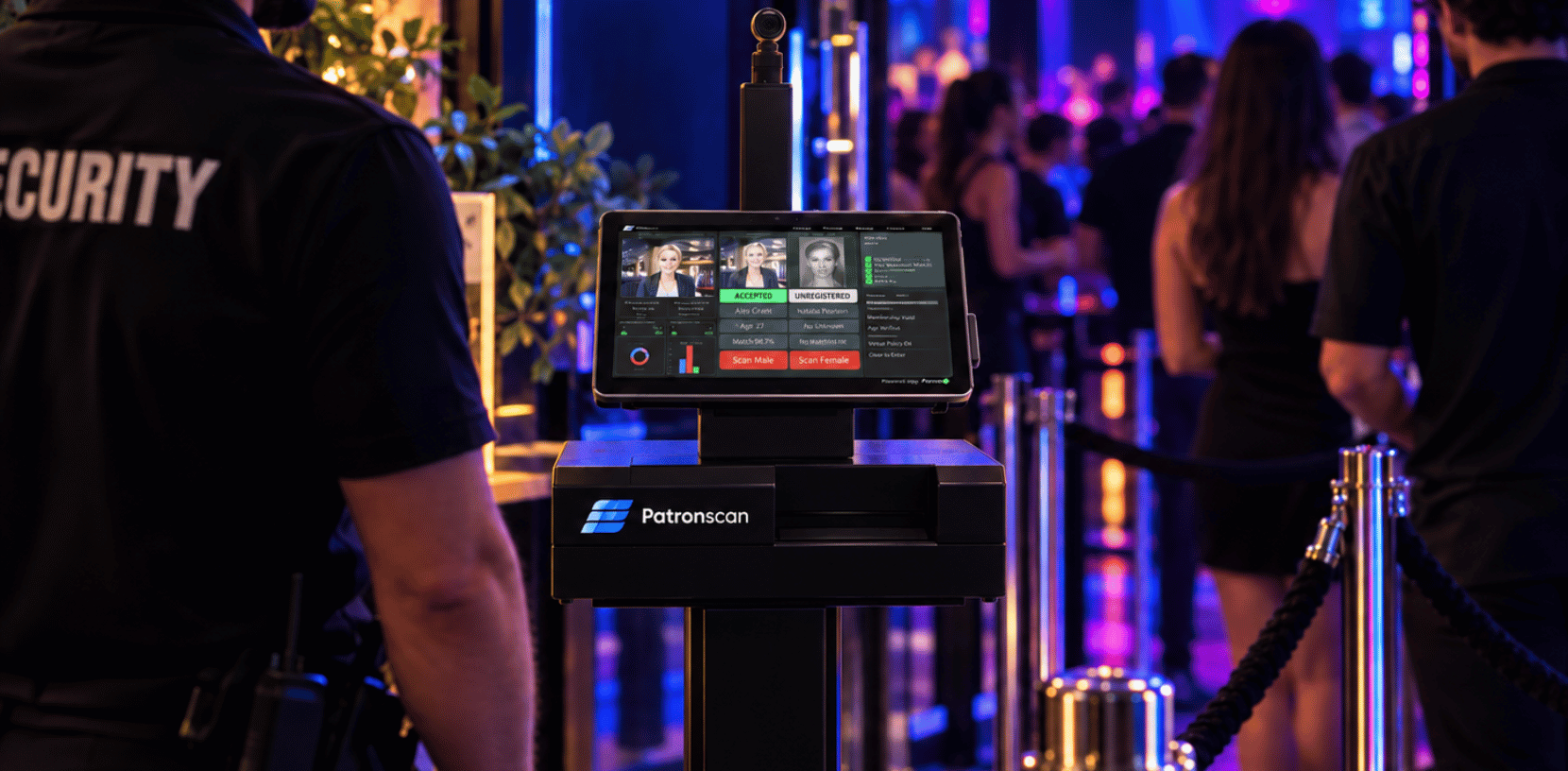
Bars and nightclubs use ID scanners to verify age, check identification, detect fake IDs, identify flagged patrons, and streamline entry. Unlike a manual ID check, an electronic ID scanning system can read identification data in seconds and provide door staff with consistent information before making an entry decision.
For high-volume nightlife venues, an ID scanner can help reduce manual errors, support compliance procedures, keep entry lines moving, and create a digital record of ID checks. Using an ID scanner can also help venues make ID verification more efficient while giving staff the information they need to identify potential underage patrons and other entry concerns.
What Does an ID Scanner Do?
An ID scanner captures data from a driver’s license, passport, or government ID by reading its 2D barcode, magnetic stripe, or machine-readable zone (MRZ) to instantaneously decode and verify personal identity.
Depending on the hardware and software technology used, an ID scanning system performs the following core tasks:
- Verify age to support underage prevention: Automatically calculate age from the date of birth on the ID, helping door staff determine whether a patron meets the venue’s minimum age requirement.
- Check expiration: Identify expired identification documents.
- Read ID data: Extract information from barcodes, machine-readable zones, and other document elements.
- Detect potential fake IDs: Analyze physical and digital security features that may indicate a counterfeit or altered document.
- Identify flagged patrons: Check whether the scanned identity is associated with a venue or network flag.
- Create entry records: Maintain timestamped records of ID verification activity.
- Support venue operations: Depending on the platform, manage guest lists, memberships, capacity, visit history, and incident information.
The important thing to understand is that not every ID scanner provides the same level of verification.
Barcode Reader vs. Forensic ID Scanner
A basic barcode reader primarily reads the information encoded in the barcode on the back of an ID. This can provide useful information such as a person’s name, date of birth, and other encoded data, but a valid barcode does not necessarily mean the physical ID itself is genuine.
A forensic ID scanner goes further by examining additional characteristics of the physical document.
For example:
- Barcode readers capture information encoded in an ID’s barcode.
- Forensic ID scanners analyze additional physical and digital security characteristics.
- Connected ID scanning platforms can add age verification, flagged-patron alerts, reporting, capacity management, and other venue tools.
This distinction matters when choosing an ID scanner for a bar or nightclub. A venue primarily looking for portable barcode scanning has different requirements than a high-volume nightclub looking for advanced fake ID detection and forensic document verification.
The Best ID Scanners for Bars and Nightclubs
The right ID scanner for bars and nightclubs depends on your venue’s entry volume, number of doors, and security requirements.
Patronscan offers different scanning options, including Guard+ for advanced forensic ID verification and Handheld for portable barcode scanning. These options allow venues to choose hardware that fits their entry environment and integrate scanning into their existing door operations.
Patronscan Guard+: Forensic ID Scanning for High-Volume Entrances
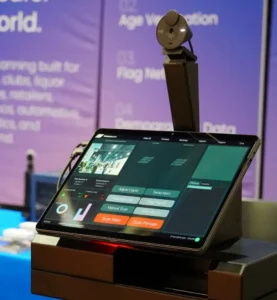
Guard+ is Patronscan’s full-featured forensic ID scanner designed for fixed, high-volume entry points.
Guard+ performs more than 8,500 forensic checks per scan and recognizes more than 14,000 ID and document types. Its scanning technology analyzes multiple document characteristics, including security features, UV-reactive patterns, font spacing, and encoded information.
Guard+ is designed for venues that need more than basic barcode reading when checking IDs at the door.
Why Guard+ works well for bars and nightclubs
- Advanced fake ID detection: Performs 8,500+ forensic checks per scan.
- High-volume operation: Designed to handle approximately 720 patrons per hour.
- Global ID coverage: Supports more than 14,000 ID and document types.
- Age verification: Automatically calculates age from ID information.
- Flagged patron management: Connects to Patronscan’s Flag Network and venue-level flagged lists.
- Capacity tracking: Automatically updates venue headcount as patrons enter.
- Guest and member lists: Supports guest lists and membership management.
- Centralized management: Connects scanning activity with the Patronscan Platform.
- Audit-ready records: Maintains scan history and other operational information.
Best suited for: high-volume bars, nightclubs, permanent main entrances, and venues looking for advanced forensic ID verification and fake ID detection.
Patronscan Handheld: Portable ID Barcode Scanning
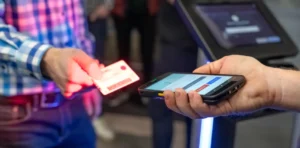
Patronscan Handheld is a portable ID scanner designed for flexible entry points and mobile operations.
Unlike Guard+, Handheld is primarily a barcode reader. It captures information encoded in the barcode on a driver’s license, ID card, or other supported identification document.
Its compact, portable design makes it useful when a venue needs to scan IDs away from a permanent countertop setup.
Handheld can be particularly useful for:
- VIP entrances
- Secondary entrances
- Patio entrances
- Smaller bars
- Pop-up events
- Festivals and outdoor events
- Temporary entry points
- Roving security staff
The Handheld is available in Wi-Fi and cellular configurations and has an all-day battery designed for portable operation.
Why choose a handheld ID scanner?
- Portable: Move the scanner between entry points.
- Barcode scanning: Quickly captures information encoded in supported IDs.
- Flexible: Useful for VIP areas, patios, secondary doors, and events.
- Wireless operation: Available with Wi-Fi or cellular connectivity.
- Compact: Designed for situations where a fixed scanner is not practical.
- Patronscan connectivity: Connects with the Patronscan platform and Flag Network.
Best suited for: smaller venues, secondary entrances, VIP entrances, patios, events, pop-ups, and businesses that need portable ID barcode scanning.
Guard+ vs. Handheld: Which ID Scanner Is Right for Your Venue?
If your priority is advanced fake ID detection and forensic document verification, Guard+ is the appropriate choice.
If your priority is portable barcode scanning at different entry points, Handheld provides a flexible option.
Some venues may benefit from using both: Guard+ at the main entrance and Handheld at secondary or mobile entry points.
10 Key Benefits of ID Scanners for Bars & Nightclubs
| Benefit | How It Works | Impact on Venue Operations |
| 1. Fast Age Verification | Automated age calculation in a few seconds | Eliminates manual math errors at the door during rush hours. |
| 2. Advanced Fake ID Detection | Forensic optical and light spectrum checks | Catches high-quality fake IDs that pass simple barcode scans. |
| 3. Streamlined Entry Lines | Scans IDs in a few seconds | Prevents bottlenecking and improves overall customer experience. |
| 4. Process Standardization | Consistent checks across all shifts and staff | Ensures every guest undergoes identical verification standards. |
| 5. Shared Flag Networks | Instant alerts for prior safety incidents | Informs door teams of patrons flagged for violent or illegal behavior. |
| 6. Enhanced Venue Safety | Real-time security intelligence | Provides proactive awareness before a guest enters the premises. |
| 7. Digital Audit Trail | Timestamped records of entry attempts | Supports regulatory compliance and internal security audits. |
| 8. Chargeback Protection | Provides proof of physical presence | Protects venue revenues against fraudulent credit card disputes. |
| 9. Multi-Entrance Management |
Syncs fixed and mobile devices | Maintains uniform security across VIP, main, and patio doors. |
| 10. Mobile Flexibility |
Uses handheld, wireless hardware | Allows roaming security for festivals, pop-ups, and outdoor spaces. |
Why Venues Use ID Scanners
1. Fast and Accurate Age Verification
Manual ID checks require door staff to locate the date of birth, calculate age in low light, verify expiration, and make split-second decisions hundreds of times a night. An ID scanner for nightclubs can automate age calculations and display identification information clearly, helping staff make more efficient entry decisions and identify potential underage patrons.
2. Forensic Fake ID Detection
Modern counterfeit IDs can replicate legitimate driver’s licenses and may contain valid-looking or valid barcode data. Advanced systems like Patronscan perform up to 8,500 forensic checks per scan, analyzing document characteristics such as UV-reactive patterns, font spacing, and other physical and digital features.
For venues where fake ID risk is a concern, forensic ID scanning provides a deeper level of document analysis than a basic barcode reader.
3. Rapid Line Management
Long lines frustrate patrons and can create security challenges outside the venue. A high-performance ID scanner for bars can process identification quickly, helping high-volume venues move guests through entry efficiently while maintaining established security procedures.
For busy nightlife environments, efficient ID processing can make a significant difference during peak entry periods.
4. Operational Consistency Across Staff
Security skill levels vary between new hires and seasoned staff. ID scanners can standardize the check-in workflow so that employees follow the same ID verification process regardless of shift, location, or venue size.
5. Patron Safety and Shared Flag Networks
Some ID scanning platforms feature a shared safety network. When a participating venue flags an individual for a serious safety incident, such as violence, property damage, or sexual harassment, an alert may appear if that ID is scanned at another participating venue.
6. Comprehensive Venue Security
By combining age verification with incident alerting and other venue-management tools, ID scanning can give venue operators additional information during the entry process.
Instead of relying only on a visual ID check, staff can use the information provided by the system alongside their own judgment and established security procedures.
7. Auditable Digital Record Keeping
Manual entry checks may leave limited documentation. Digital ID scanning can create records detailing scan times, entrance locations, scan outcomes, and alerts.
Depending on the system configuration and applicable requirements, these records can support internal security procedures, operational reporting, and compliance processes.
Using an ID scanner does not by itself guarantee compliance, but it can help venues ensure compliance with their applicable age-verification, liquor, capacity, and record-keeping procedures when configured and used appropriately.
8. Defending Against Chargeback Fraud
Patrons occasionally dispute legitimate cover charges, VIP tables, or bar tabs by claiming they never visited the venue. A timestamped ID scan can provide evidence that an identification document was presented at the door, helping managers investigate and respond to certain disputes.
9. Multi-Entrance Synchronization
Large venues often run VIP doors, patio gates, and main entrances simultaneously. Networked ID scanning can connect hardware across multiple entry points, helping venues maintain consistent procedures across their entrances.
10. Portable and Handheld Flexibility
Handheld ID scanners offer mobile barcode-scanning capabilities for outdoor events, temporary pop-ups, patio entrances, and roving security staff.
Wireless hardware can connect to the main platform, giving venues greater flexibility when they need to scan IDs away from a permanent entrance setup.
Frequently Asked Questions
What is the difference between barcode scanning and forensic ID scanning?
Barcode scanning reads the information encoded in a 2D barcode on the back of an ID. Forensic ID scanning uses specialized lighting, such as UV, infrared, and visible light, together with image processing to examine physical security features and other characteristics of the document.
Can an ID scanner help prevent underage entry?
Yes. An ID scanner can automatically read the date of birth from supported identification documents and calculate the patron’s age. This can help door staff identify whether a patron meets the venue’s minimum age requirement.
However, the scanner supports the decision-making process; venue staff remain responsible for the final entry decision.
How long is patron data retained in an ID scanning system?
Data retention policies vary based on venue configuration, system settings, and applicable local privacy laws. Venues should review the privacy and data-retention policies of any ID scanning provider before implementation.
How does a Flag Network work?
When a patron is involved in a verified safety incident at a participating venue, authorized personnel can log a flag. If that patron attempts to enter another participating venue, staff may receive a private alert when the associated ID is scanned.
Can ID scanners integrate with venue operations?
Depending on the platform, ID scanners can integrate with tools for guest lists, memberships, capacity tracking, flagged patron management, scan records, and centralized reporting.
Integration capabilities vary by hardware and software, so venues should confirm which systems and workflows are supported before choosing an ID scanning solution.
Do All Bars and Nightclubs Need an ID Scanner?
Not every venue requires an automated ID scanner. Whether an establishment needs an ID verification system depends on guest volume, local legal requirements, peak entrance speeds, security procedures, and the venue’s risk profile.
A smaller neighborhood pub may rely on manual checks, while high-volume venues, nightclubs, multi-entrance facilities, and venues with more complex entry requirements may use automated ID scanning to make ID verification more efficient.
Summary: Why Venues Trust Patronscan
Using an ID scanner for bars and nightclubs can help venues automate age checks, identify potential fake IDs, streamline entry, maintain digital records, and support venue safety procedures.
Patronscan provides different scanning options for different operational needs. Guard+ provides advanced forensic ID verification for high-volume entrances, while Handheld provides portable ID barcode scanning for flexible entry points.
By choosing the right combination of scanners for bars and clubs, venues can create a more efficient ID-checking process while giving door staff the information and tools they need to support age verification, security, and compliance procedures.