Many rely on deception, not force: they rent with a fake or stolen identity, often with a stolen payment card, and never return the vehicle.
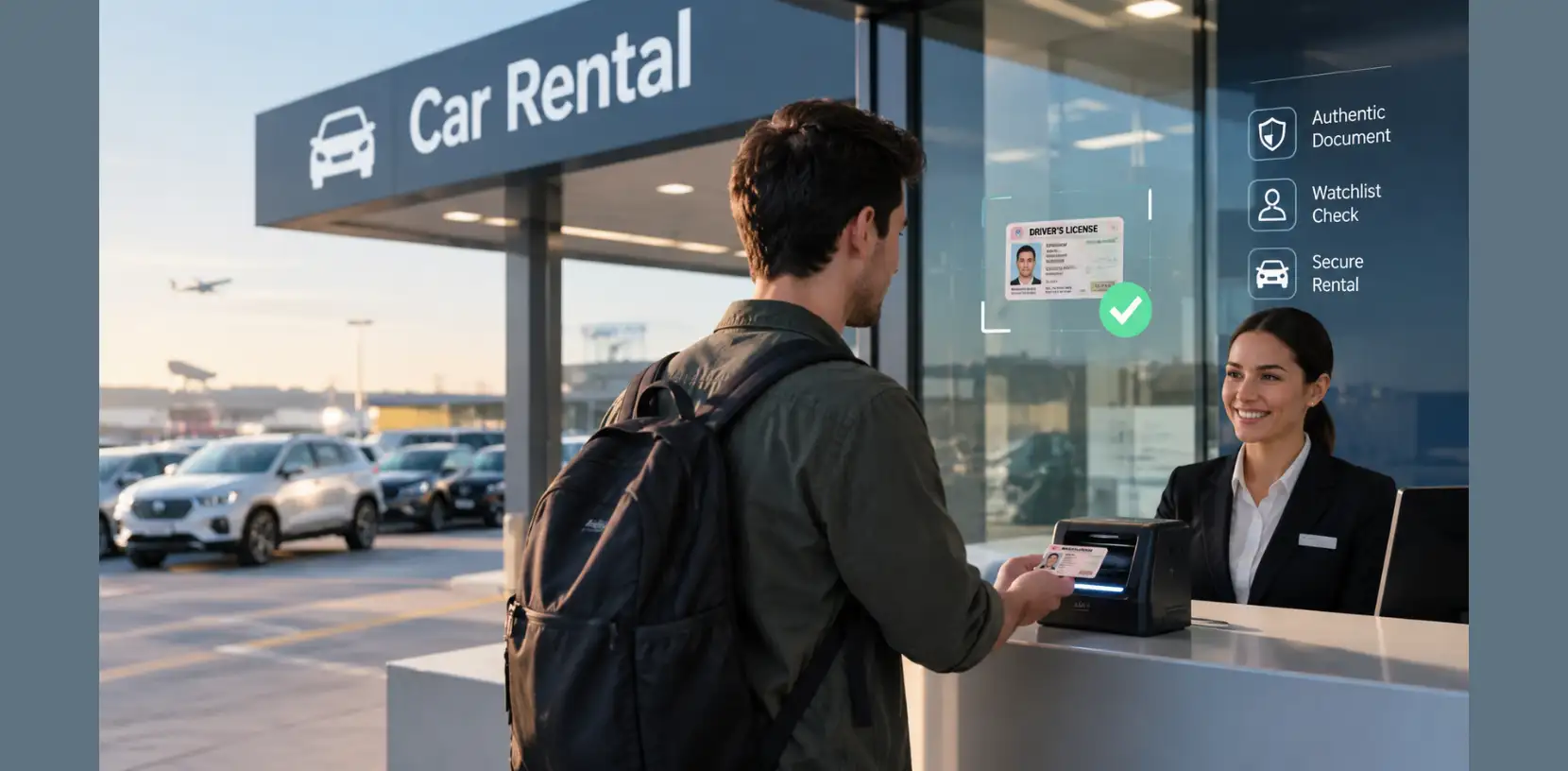
ID scanning reduces rental fraud and vehicle theft by authenticating the driver's license at pickup, before keys are released. A forensic ID scanner checks the document's security features to catch counterfeit or altered licenses, screens the renter against flags from previous incidents, and creates a timestamped record of who took each vehicle. Together, these steps stop the most common rental theft method: renting a vehicle under a fake or stolen identity and never returning it.
Many rental vehicle thefts don’t start with a broken window. They start at the counter, with a driver’s license that looks right and a credit card that clears. Once the keys are handed over, the vehicle is legally in the renter’s possession, and it can be days before anyone realizes it isn’t coming back.
That makes identity verification at pickup one of the few points where a rental operator can stop fraud before the loss happens.
Why Rental Fleets Are a Target for Fraud and Vehicle Theft
For criminals, a rental fleet is an attractive target, and busy counters give rise to rushed decisions:
- The keys are handed over. There’s no lock to break or immobilizer to bypass, just a counter to get past.
- High-value vehicles are always available at airports and neighbourhood branches.
- Losses surface late. An overdue rental often looks like a late return before it looks like theft.
Recent cases show a common pattern:
| Case | What Happened | How the Vehicles Were Obtained |
| New York (U.S. Attorney, Aug. 2026) | Rental cars worth millions of dollars were taken across the Northeast; none were returned | Fake licenses with the defendants’ photos and victims’ names, plus stolen credit cards |
| Nashville airport (WSMV, Apr. 2026) | A rented Jeep was later detected near the U.S.–Mexico border | Fraudulent driver’s licenses presented to multiple rental companies |
| Missouri (U.S. Attorney, July 2023) | At least 19 rental vehicles worth more than $1.1 million were never returned | Fake driver’s licenses and counterfeit credit cards |
How Car Rental Fraud Happens at the Counter
Recent cases show the same pattern: a fake or borrowed identity at pickup, followed by a vehicle that never comes back.
Rental fraud usually depends on one weak point: staff are asked to judge a document by eye, in seconds, while a line builds behind the customer. These are the schemes rental operators see most often:
- Fake licenses with a real victim’s identity. The renter’s own photo sits beside a stolen name and date of birth, so the photo matches the person at the counter.
- Altered genuine licenses with a changed photo, name or expiry date.
- Matching payment cards made in the same fake name.
- Repeat offenders who try again at another branch.
- Contactless pickup abuse, where thieves use digital bookings to avoid face-to-face contact.
A visual inspection can’t tell you whether a card is genuine. Neither can a basic barcode reader, since a counterfeiter can encode any data they choose.
How ID Scanning Technology Helps Prevent Vehicle Theft
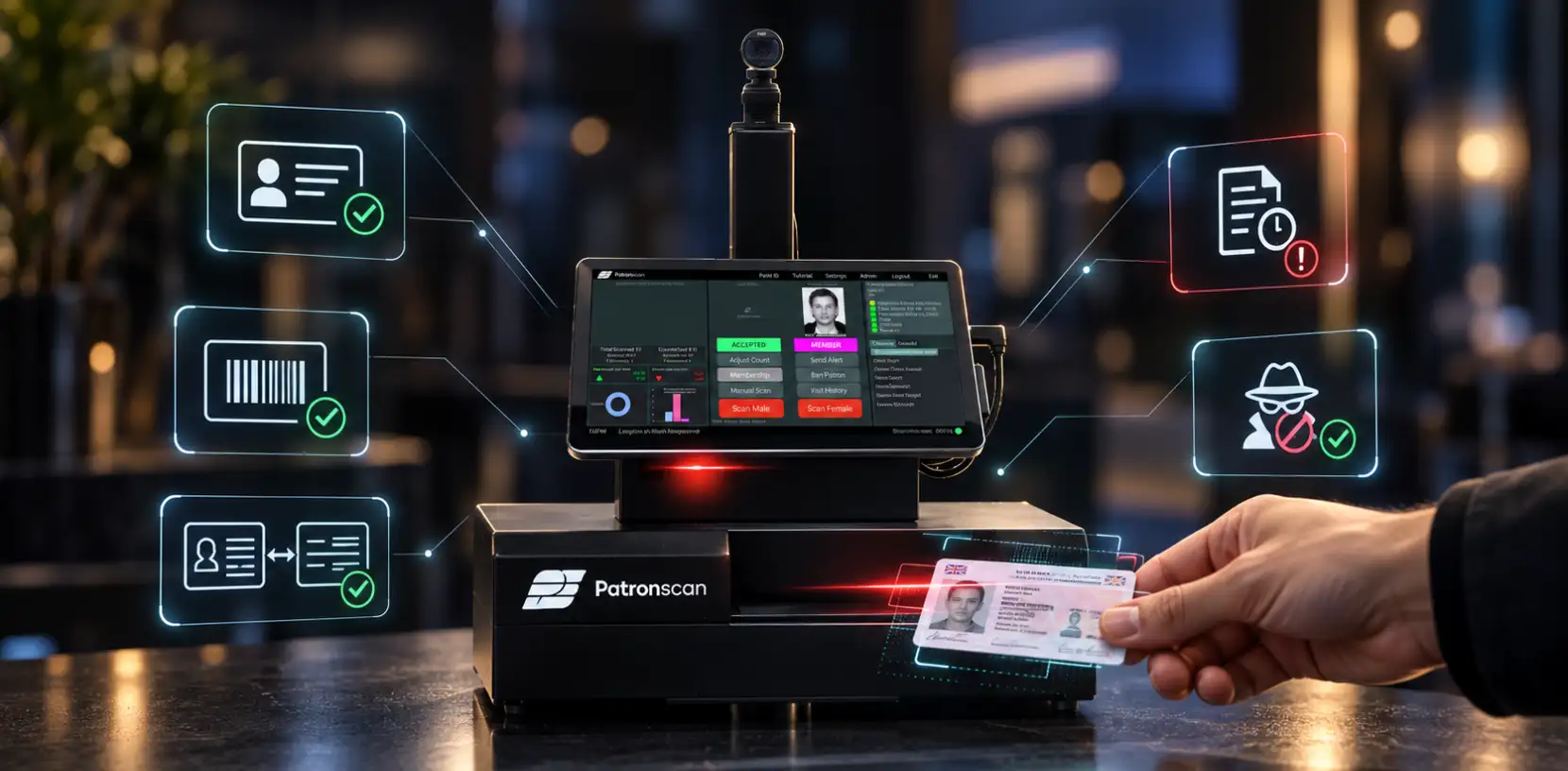
Forensic ID scanning moves the decision from an associate’s eye to the document’s security features. Patronscan’s fraud detection system analyzes more than 8,500 data points per ID under white, infrared and ultraviolet light, and reads around 14,000 ID and document variants, including North American driver’s licenses and passports.
At pickup, the process takes seconds:
- Scan the license at the counter, curbside or on the lot as part of your rental service. A standard scan takes under one second; full forensic analysis takes under 10 seconds.
- Authenticate the document. Microprint, holograms, fonts and template details are analyzed to catch fake and altered IDs, even when the photo matches. See What Is Forensic ID Scanning.
- Screen for flags. Each scan is compared against your private flag list and, optionally, Patronscan’s shared Flag Network, so you’re alerted immediately to suspicious renters.
- Verify the details. Match the authenticated name to the payment card and reservation.
- Release the vehicle with a record. A timestamped scan ties each identity to a specific vehicle, so you have evidence if it isn’t returned.
| Risk | How ID Scanning Helps | Patronscan Solution |
| Fake license with a stolen identity | Security features fail even when the photo matches | Fake ID detection |
| Altered genuine license | Tampered fields and template mismatches are flagged | Forensic fraud analysis |
| Repeat offender at another branch | A flag at one location alerts every other location | Flag Network |
| App-based or contactless pickup | Remote document authentication plus face matching | Online ID verification |
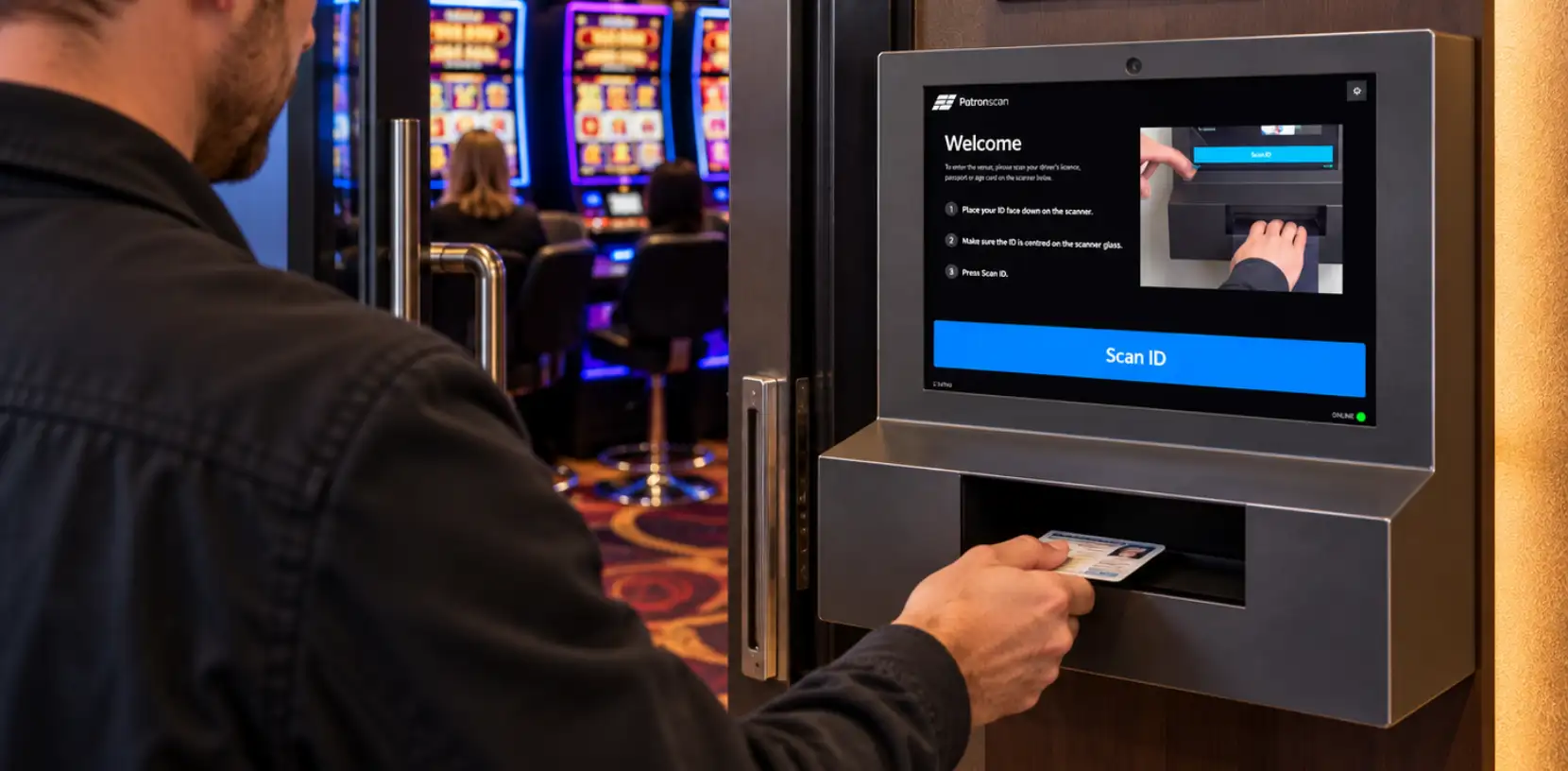
| After-hours pickup rooms | The door unlocks only after a successful scan | Access control (IVAC) |
| Disputes and insurance claims | Timestamped records show who took each vehicle | Online Security Dashboard |
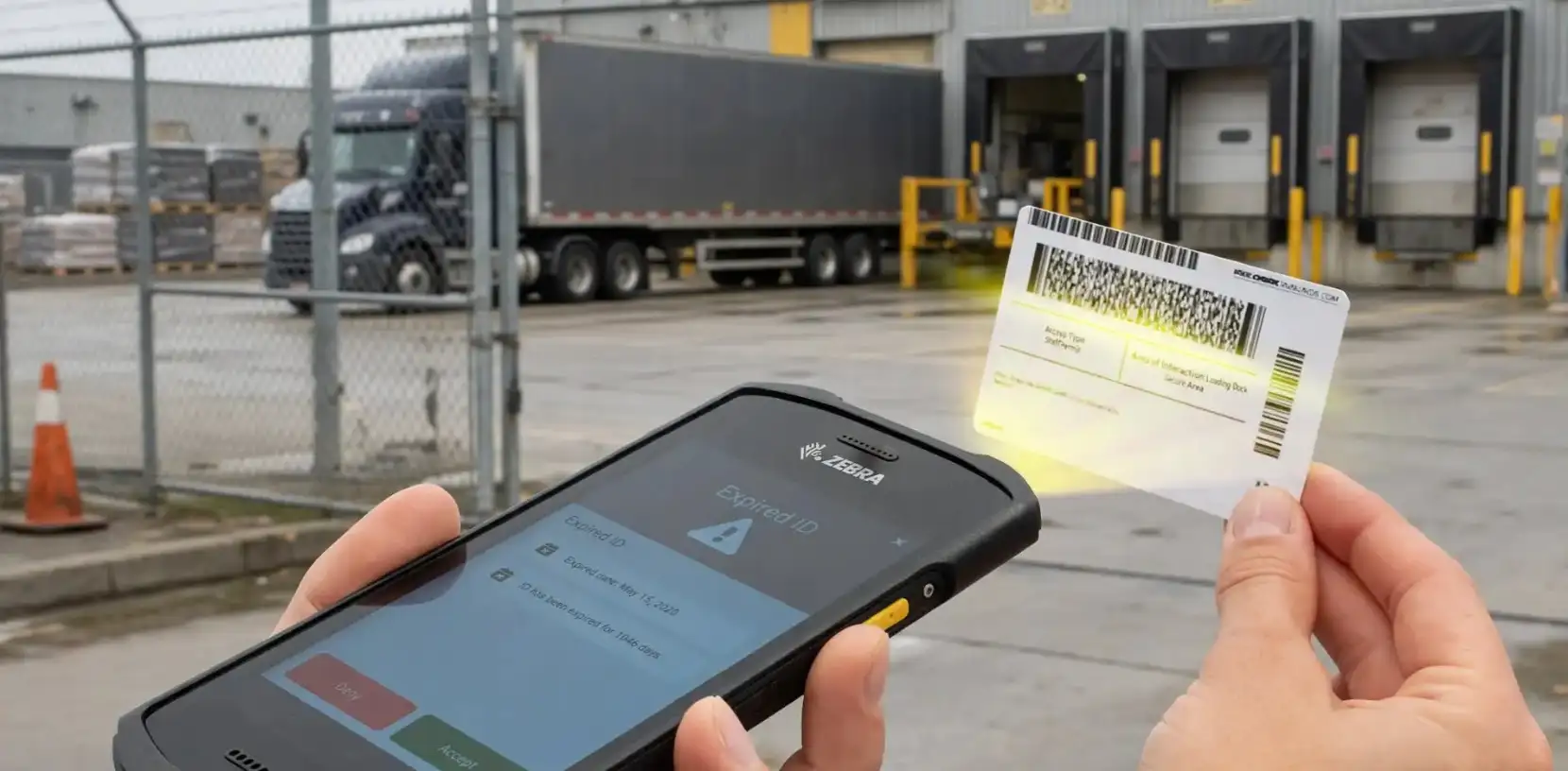
ID scanning isn’t a background check, and it doesn’t confirm who owns a credit card. Its job is to stop a fake identity at the counter. The same approach already protects automotive dealerships before test drives and logistics and transportation sites before freight is released.
What to Look For in an ID Scanning Solution for Your Rental Company
| Factor | Question to Ask |
| Forensic analysis | Does it analyze UV and infrared security features, or only read the barcode? |
| Coverage | Does it read U.S., Canadian and international IDs from travelling customers? |
| Speed | Can it authenticate an ID in seconds without slowing the counter? |
| Flagging | Does a flag at one branch reach every location in real time? |
| Hardware | Are there counter (Dualpass), mobile (Handheld) and unattended (IVAC) options? |
| Privacy | Can you control what data is stored and for how long? |
A scanner is most effective as part of a consistent strategy: scan every renter and additional driver at every handover point, and flag non-returns quickly to increase protection at the next branch. Scan records also help you track repeat attempts and deter potential offenders.
Privacy: Scanning an ID collects personal information people expect you to protect. Canada’s Privacy Commissioner advises collecting the least information needed for a legitimate business purpose, and U.S. rules vary by state. Set a retention period, tell customers why you scan, and confirm requirements with legal counsel.
Car Rental Fraud FAQs
Can a rental agent spot a fake ID by eye?
Not reliably. Many fake licenses carry the fraudster’s real photo with a victim’s details. Forensic scanning analyzes UV patterns, microprint and holograms that are difficult to confirm visually.
How long does an ID scan take at a rental counter?
With Patronscan, under one second for a standard scan and under 10 seconds for a full forensic analysis.
Can ID scanning stop repeat offenders across branches?
Yes. A flag added at one location applies to every later scan, so other branches are alerted if that renter returns.
The Bottom Line: The Impact of ID Scanning on Car Rental Fraud
Many security measures focus on recovering a vehicle after it’s gone. ID scanning is essential because it works before the keys are handed over. Reducing the number of vehicles lost to fake identities helps prevent the significant financial loss of a single fraudulent rental, while a quick, secure counter process keeps lines moving for the customers you trust. As fraud tactics evolve across the rental industry, that can lead to stronger fleet protection and lower financial risk.
Ready to protect your fleet? Book a Patronscan demo to see forensic ID scanning at your counters, curbside and after-hours pickup points.
Featured Resources