"We scan every ID and if it beeps green, it's good." It's one of the most common things businesses say about their ID-checking process, and it's also one of the most common ways a fake ID gets through the door.
Here’s the uncomfortable truth: a barcode that scans successfully does not mean the ID is real. Counterfeiters know exactly how basic scanners work, and increasingly, they’re building fakes specifically to pass them. Understanding the difference between “reading” an ID and actually verifying it is one of the most important things any business checking IDs can learn, and it changes how you should think about the technology sitting at your front counter, entry point, or lot.
What a basic scanner does
Most low-cost ID scanners do one thing: they read the PDF417 barcode or magnetic stripe on the back of an ID and display whatever data is encoded there, including the name, date of birth, address, ID number. That’s it. The scanner isn’t checking whether that data is accurate, whether the barcode’s internal structure matches what a real state-issued ID should contain, or whether the physical document itself has been tampered with. It’s just decoding and displaying.
That was a reasonably effective deterrent when fake IDs were low effort. Blurry photos, obviously wrong fonts, and barcodes that simply didn’t scan, was an era that is largely over.
How today’s fake IDs are built to beat that
Modern counterfeiters use commercial-grade printers, barcode encoding software, and magnetic stripe encoders to produce IDs where the encoded data looks completely legitimate because in a narrow sense, it is legitimate data, just attached to a fraudulent document. Some fakes even reference lookalikes or spoofed data formats designed specifically to slip past scanners that only check “does this barcode decode cleanly,” rather than “does this barcode’s structure, the printed data, and the physical document all agree with each other.”
That’s the gap: a fake ID can absolutely produce a valid-looking scan result on basic equipment. The scan succeeding was never proof the ID was real. It just proves the barcode was readable.
What real verification looks like
Forensic ID verification closes that gap by checking several independent things at once instead of just one:
- Barcode structure, not just barcode content. Does the encoding actually follow the issuing state’s real specification, or just look plausible?
- UV and IR security features. The patterns and markers built into genuine government-issued IDs that are difficult and expensive for counterfeiters to replicate convincingly.
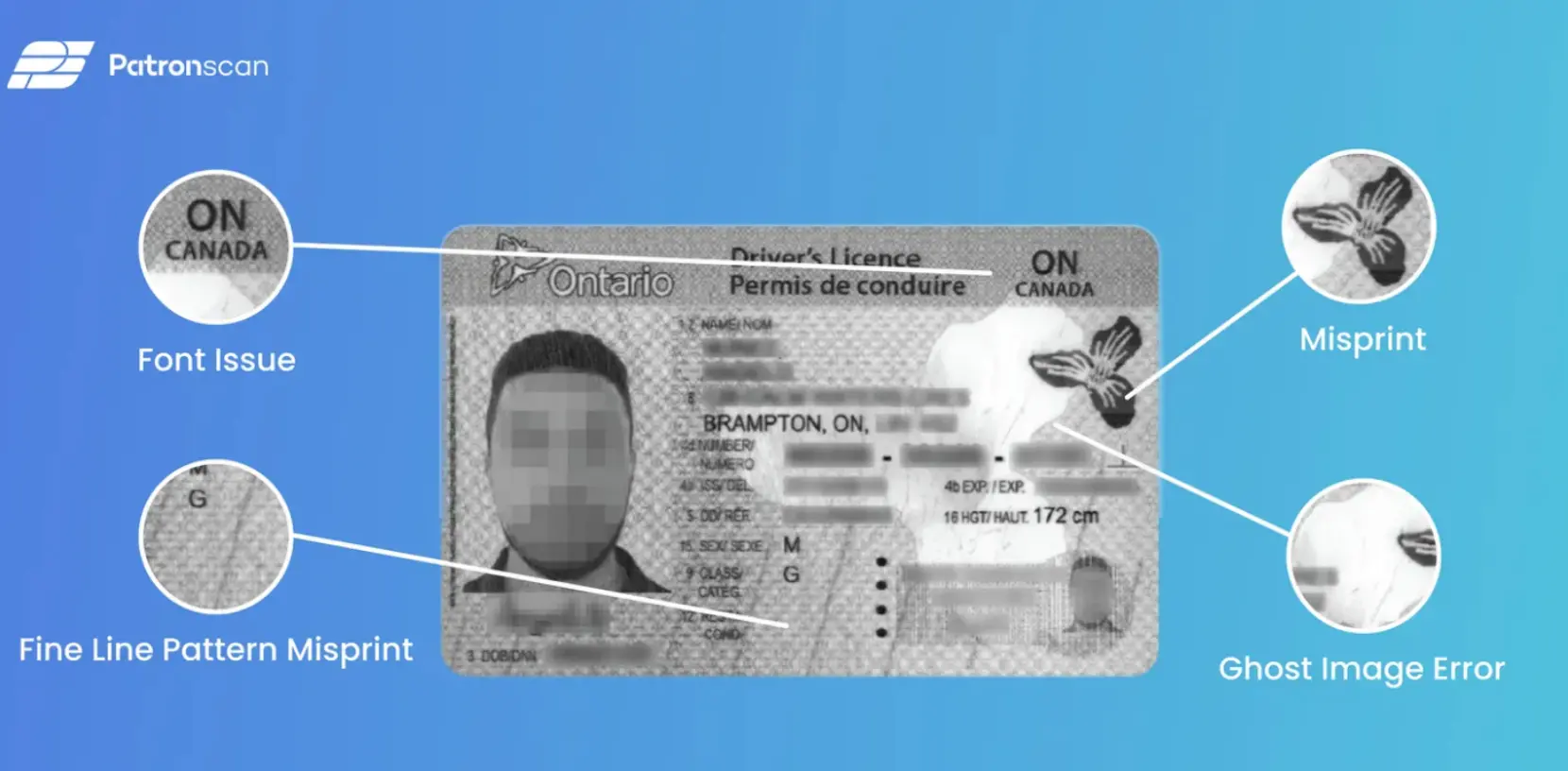
- Template and print matching. Comparing fonts, spacing, and layout against what that specific ID type is supposed to look like.
- Cross-field consistency. Does the birthdate match the calculated age, do the ID number formats follow the right pattern, does every field agree with every other field?
Any single one of these checks can be beaten in isolation. Beating all of them at once, in real time, is a fundamentally harder problem, which is the entire point of layering them.
Why this matters no matter what you’re checking IDs for
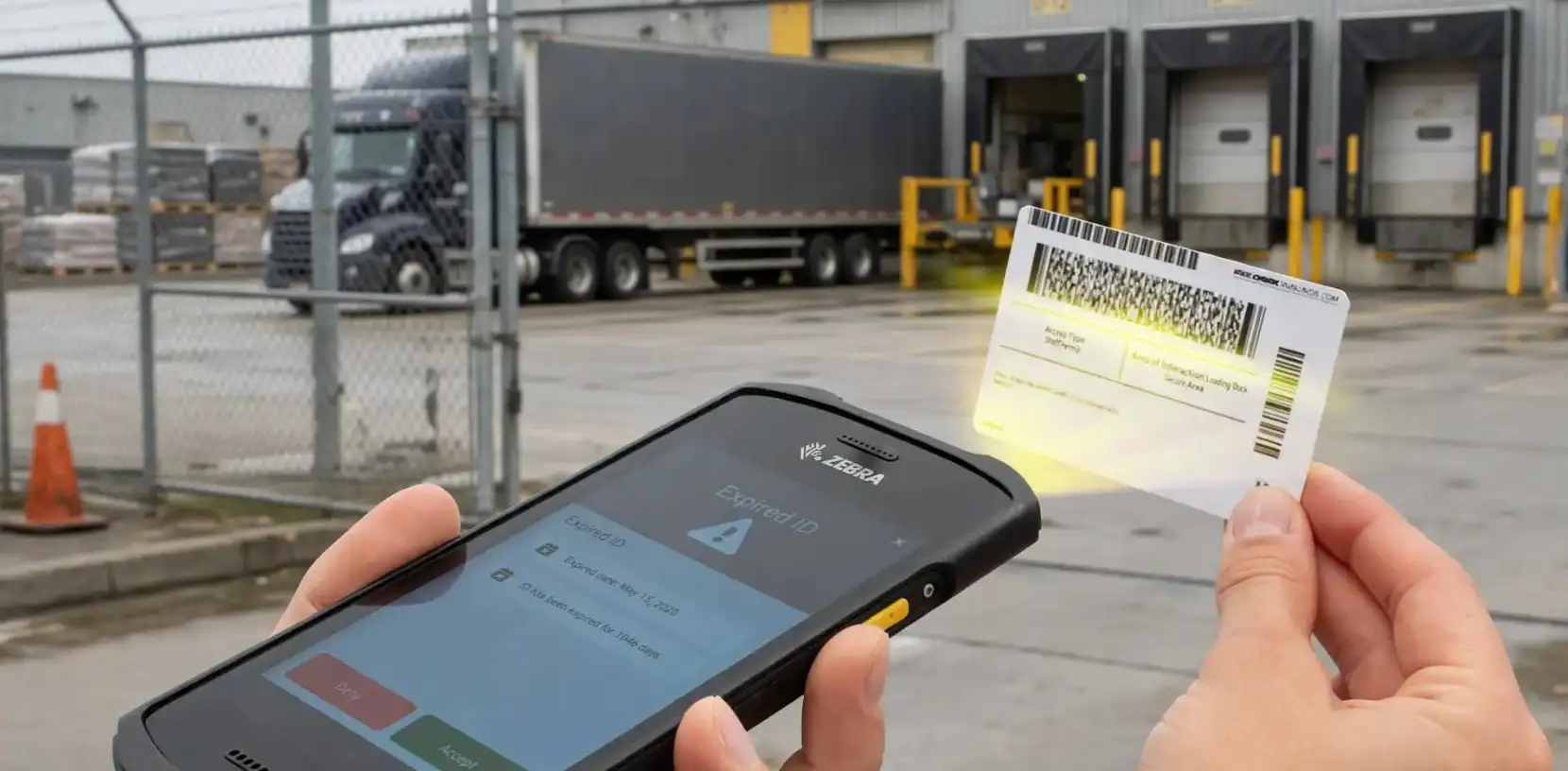
A retailer verifying an age-restricted purchase, a distribution center confirming a driver or contractor at the gate, a bar checking a line of IDs on a Friday night, and a dealership verifying identity before handing over test-drive keys are all exposed to the exact same gap: a scanner that reads a barcode isn’t the same as a system that authenticates a document. The stakes differ, because a missed fake ID might mean an underage sale, an unauthorized person on-site, or a vehicle that doesn’t come back. The underlying technology question is identical: is this actually checking the ID, or just reading it?
Where Patronscan fits in
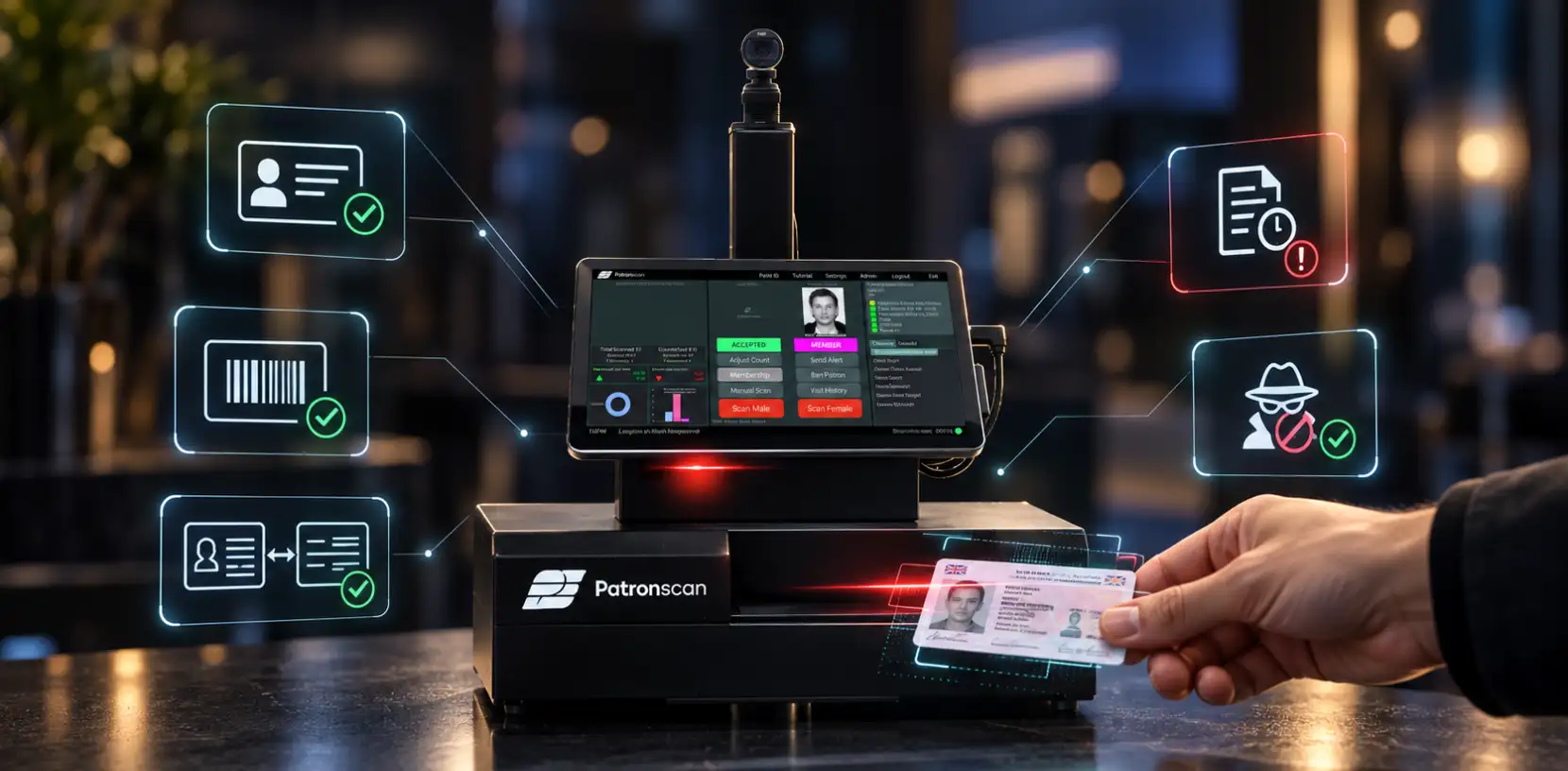
This is the exact problem forensic verification is built to solve. Patronscan checks IDs against 8,500+ data points across more than 14,000 ID types from around the world, layering barcode structure, security features, and template/data consistency checks in real time, at the speed of a normal transaction, with near-zero false positives. It’s built to catch the fakes that are specifically designed to pass a barcode-only scan, not just the obviously bad ones. And every flagged individual gets shared across Patronscan’s private network, so a fake caught at one location is recognized everywhere else, too. Patronscan has verified more than 500+ million IDs worldwide since 2005 on that model.
Quick answers, if you’re short on time
- Does a successful barcode scan mean an ID is real? No. It only means the barcode was readable, not that the document or the data on it is authentic.
- Can counterfeiters make a fake ID that scans correctly? Yes. Commercial printers and barcode/magnetic-stripe encoding tools make this increasingly common, especially for IDs targeting age-restricted purchases or entry.
- What’s the difference between a basic scanner and a forensic verification system? A basic scanner reads one data source (the barcode). Forensic verification cross-checks multiple independent signals: barcode structure, security features, printed template, and data consistency, at the same time.
- Is visual inspection by staff enough on its own? Not reliably. Sophisticated fakes replicate holograms, microprinting, and other visual security features well enough to fool a quick look, especially under time pressure.
If your team is relying on “it scanned, so it’s fine” as your verification standard, it’s worth finding out what a real forensic check would catch that yours doesn’t. Talk to a Patronscan specialist about seeing the difference on your own IDs.