The most reliable method is a forensic ID scanner. It reads the ID, calculates age automatically and checks the document for signs of a fake. A visual check depends on the clerk; a scanner gives the same result on every shift.
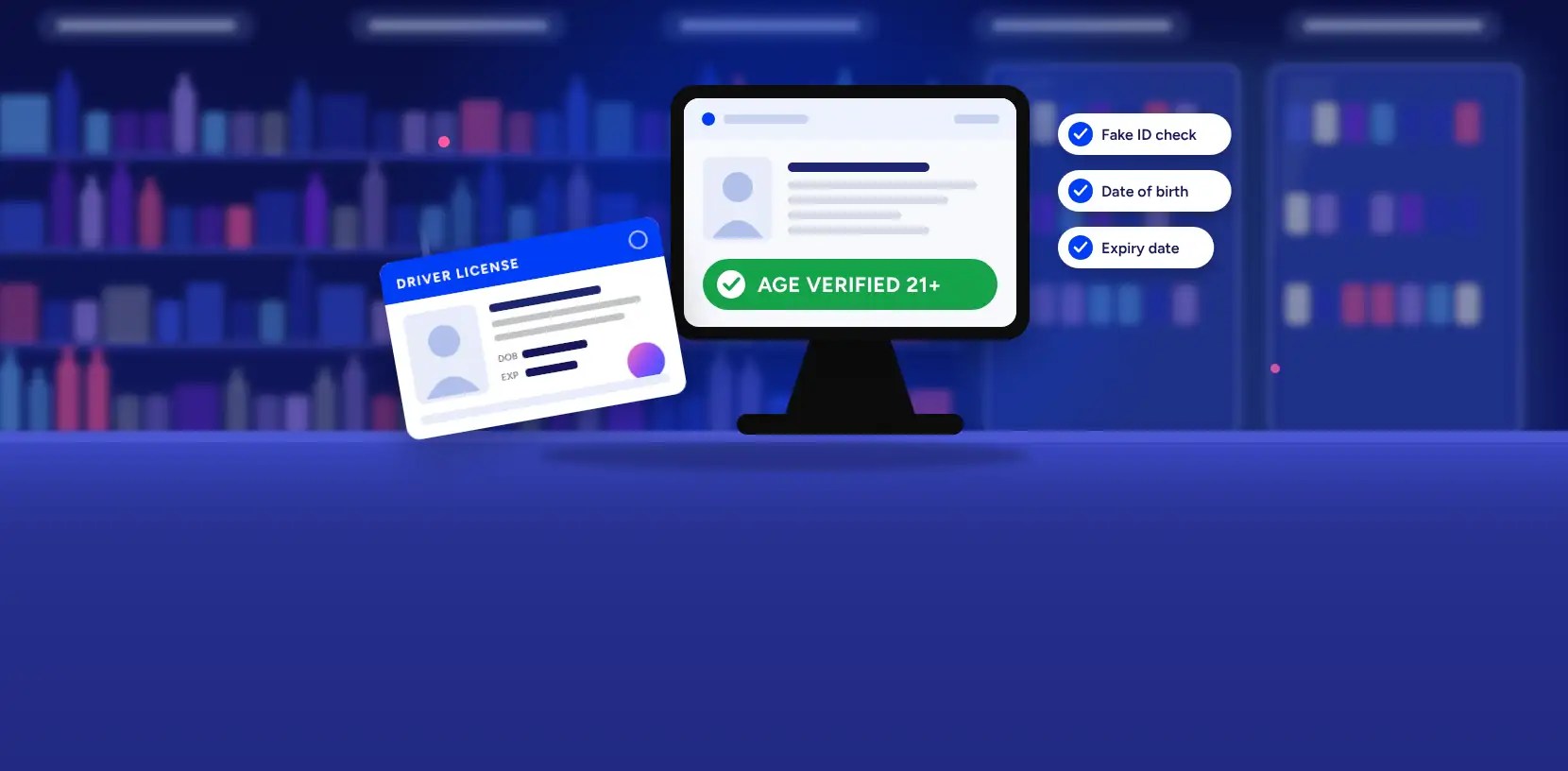
Age verification for convenience stores means confirming that every customer buying alcohol, tobacco or vape products is of legal age, which is 21 or older for both in the U.S. The better way to do it is a forensic ID scanner, not a quick glance at a driver’s license.
Instead of eyeballing an ID and doing date-of-birth math at the register, the clerk scans it. In seconds, the scanner calculates the customer’s age, checks the document for signs of a fake, and logs a timestamped record of the check.
That beats a visual check on every count. It’s faster at checkout, it catches sophisticated fakes a busy clerk would miss, it works the same way on every shift, and it gives you proof of due diligence if a sale is ever challenged. The scanner doesn’t replace your employee; it gives them better information to make the call at the counter.
Patronscan age verification is built for exactly this, helping store owners verify age for alcohol, tobacco and vape sales with confidence.
Why Age Verification Matters for Convenience Stores
Convenience stores sell more age-restricted products, more often, with fewer staff than almost any other retailer. One clerk may run the register, restock the cooler, and answer the lottery terminal at the same time. That is exactly when a minor with a borrowed or fake ID gets through.
The stakes are real. Under federal law, no retailer may sell tobacco products to anyone under 21, and the FDA tells retailers to check photo ID for everyone under 30. For alcohol sales, the legal drinking age across the U.S. is 21, and state-specific rules decide the penalties for selling alcohol to a minor.
Relying on a visual check alone leaves every sale up to one person’s judgment, and the cost of a mistake falls on the store.
The Cost of Manual ID Checks: Fines, License Suspension and Fake IDs
A single missed ID check can cost a convenience store far more than the sale. Penalties stack up per violation, and repeat offenses can stop you selling a product altogether.
Tobacco: federal penalties per violation
FDA runs compliance checks at tobacco retailers. A first violation brings a warning letter; later violations bring civil money penalties that grow with each repeat. Five or more repeat violations within 36 months can lead to a no-tobacco-sale order for that location.
Under current FDA maximums, a second violation within 12 months can cost up to $365, and a third within 24 months up to $727. A fourth violation within 24 months rises to $2,920, a fifth within 36 months to $7,300, and a sixth within 48 months to $14,602.
State and local tobacco laws can add their own fines on top.
Alcohol: liquor license suspension and revocation
For alcohol sales, enforcement is state-specific. Depending on the state, selling alcohol to a minor can mean fines or the suspension or revocation of a liquor license, and in many states the clerk who made the sale can face criminal charges too. A few examples from large states show the range.
In California, a first violation typically brings a 15-day license suspension, a second within 36 months a 25-day suspension, and a third within 36 months license revocation. In New York, the State Liquor Authority can seek civil penalties of up to $10,000 per violation, with first offenses typically fined $2,500 to $4,000, and repeat offenders face suspension or revocation. In Texas, the clerk who sells to a minor commits a Class A misdemeanor, punishable by a fine of up to $4,000, up to a year in jail, or both. In Florida, a first sale to someone under 21 is a second-degree misdemeanor, and a repeat within a year becomes a first-degree misdemeanor.
Across the alcohol industry, many states run underage compliance checks, where a minor attempts to purchase alcohol under supervision. Penalties and procedures change, so check your state’s alcohol regulator for current rules.
Sophisticated Fakes Beat the Naked Eye
Today’s fake IDs copy holograms, fonts and barcodes closely enough to fool a tired clerk. Common failure points of a visual-only check:
- Doing date-of-birth math in your head during a rush
- Missing an altered birthdate or an expired ID
- Unfamiliar out-of-state or international IDs, and even passports
- Inconsistent checks from one shift or employee to the next
- No record to prove you checked if a sale is challenged
How an ID Scanner Verifies Age and Catches Fakes at Checkout
An ID scanner lets staff quickly verify age with an automated verification process instead of a visual check. It reads the ID, calculates the customer’s age and checks whether the document is genuine, all in seconds.
Barcode-only vs. forensic scanners
Many basic scanners only read the barcode on the back of a driver’s license. That confirms the date of birth encoded there, but a fake can carry a barcode that matches its fake details. Even a scanner that uses machine learning algorithms to spot suspicious barcode patterns, reducing fake ID’s at the counter, still only sees the barcode. Reading the barcode alone does not prove the ID is real.
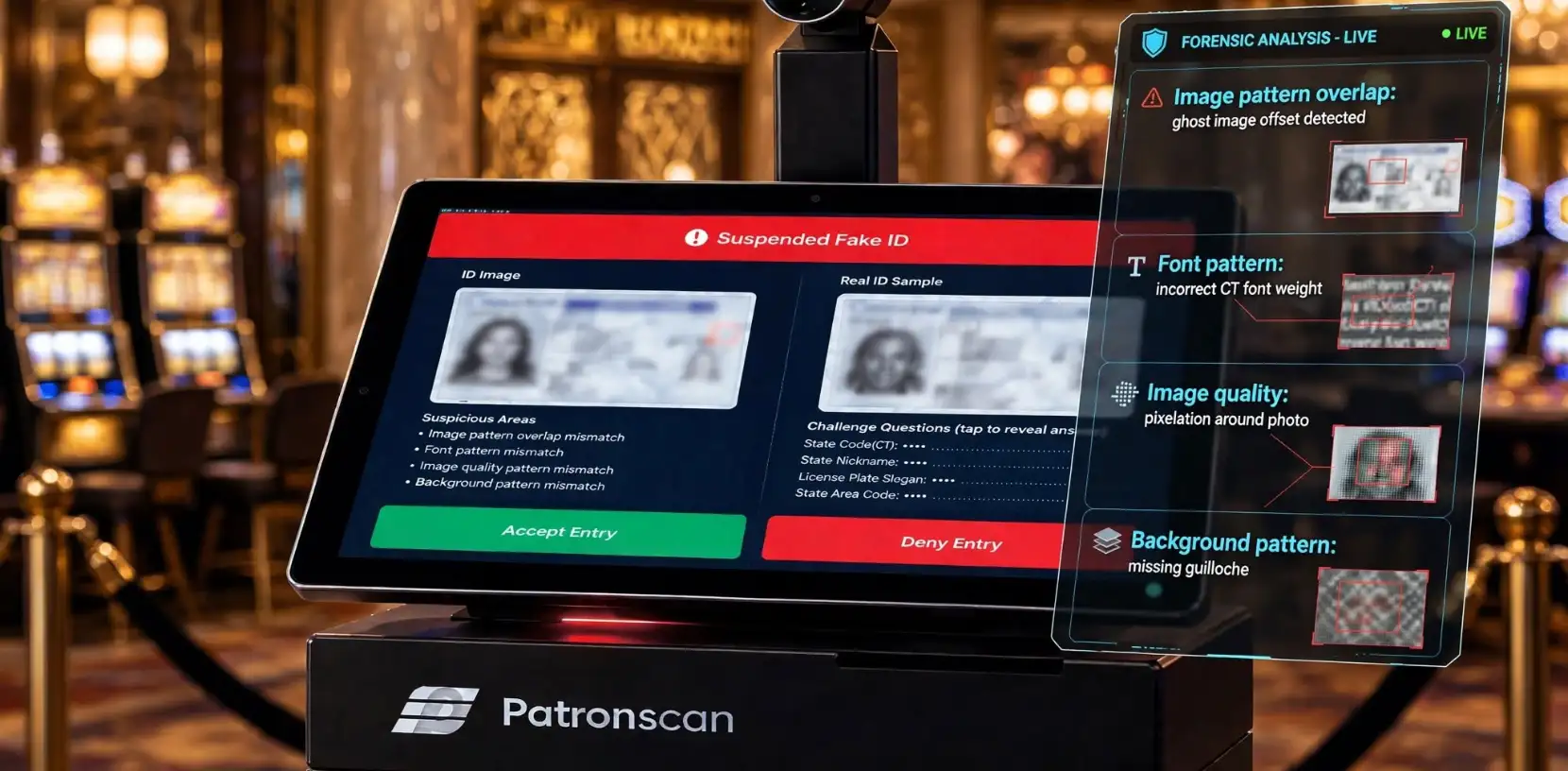
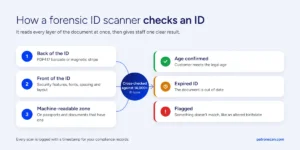
A forensic ID scanner like Patronscan reads every layer of the document at once:
- Back of the ID: the PDF417 barcode or magnetic stripe.
- Front of the ID: visual security features, fonts, spacing and layout.
- Machine-readable zone (MRZ): on passports and other documents that have one.
Patronscan cross-checks thousands of data points per ID against a library of 14,000+ ID and document types, updated weekly. Its proprietary algorithms look for small discrepancies a person would miss, and the platform keeps improving through machine learning and real-world data.
A clear result in seconds
Within seconds, the clerk sees one of three outcomes:
- Age confirmed: the customer is old enough to buy.
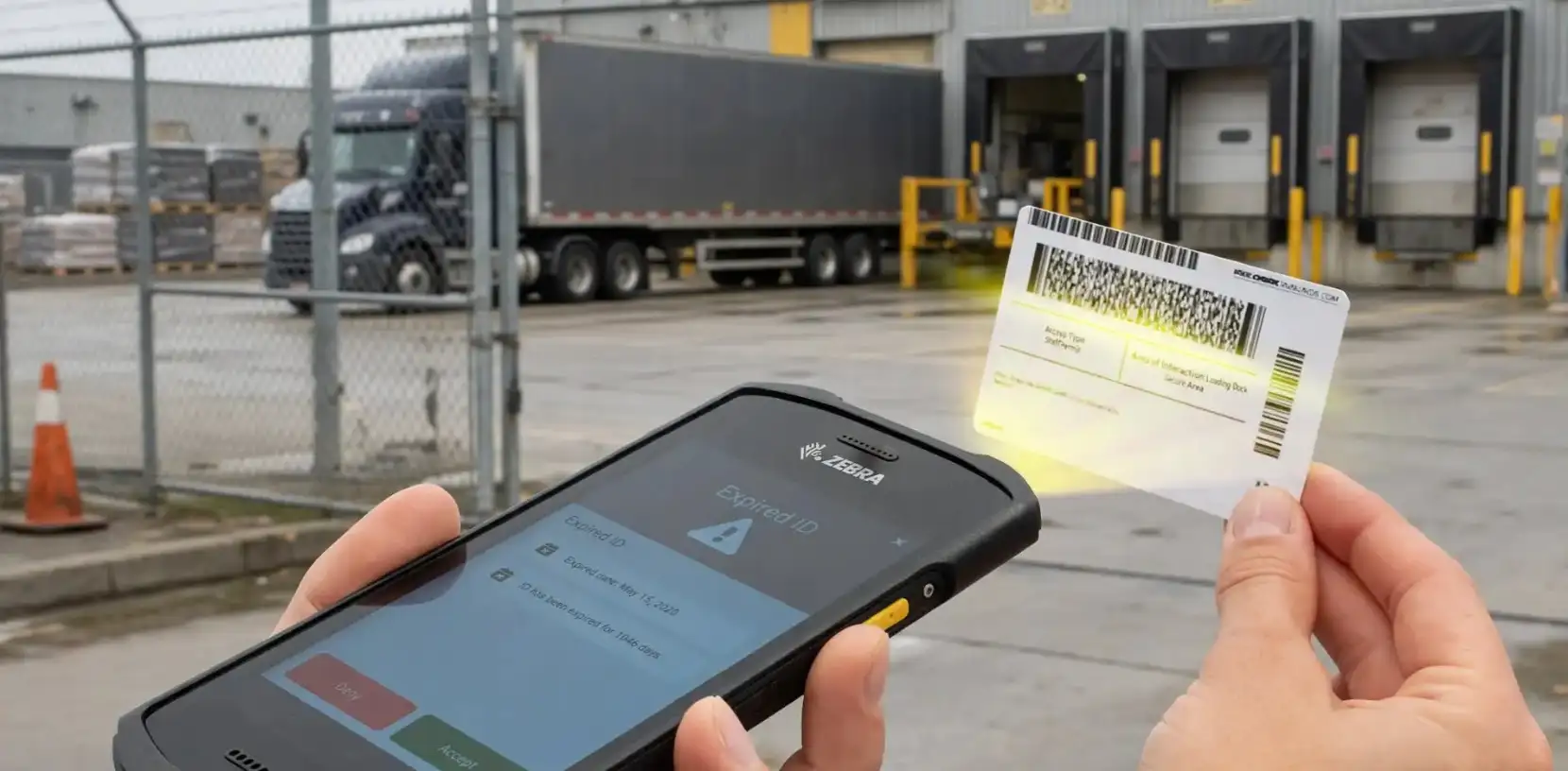
- Expired ID alert: the document is out of date.
- Flag: an element doesn’t match the expected pattern for that ID type, such as an altered date of birth.
Think of it like a traffic light: green means go, red means stop. No mental math, no squinting at dates, and no judgment calls under pressure, even when multitasking at a busy register.
Your employee still makes the final call
A scanner checks the ID, not the person holding it. Staff still need to confirm that the customer’s face matches the photo on the ID, since a real ID borrowed from an older friend or sibling will pass any scanner. What technology removes is the guesswork: it calculates age, runs the same checks every time, and highlights possible problems before the employee approves the sale.
Patronscan: A Convenience Store ID Scanner for Every Counter
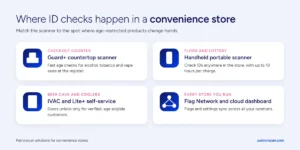
Patronscan offers age verification solutions for convenience stores that fit the counter, the cooler and the front door. Staff need about five minutes of training, then it’s one tap and a clear pass or fail on screen. That matters in stores with frequent staff turnover: new hires don’t need to memorize what every state’s driver’s license looks like.
| Where you need it | Patronscan solution | What it does |
| Checkout counter | Guard+ | Compact, countertop-friendly forensic ID scanner with a high-speed barcode reader; supports 14,000+ ID and document types |
| Floor, lottery or secondary register | Handheld | Portable scanner, up to 10 hours per charge; Wi-Fi or cellular models; reads barcodes, magnetic stripes and passport MRZs |
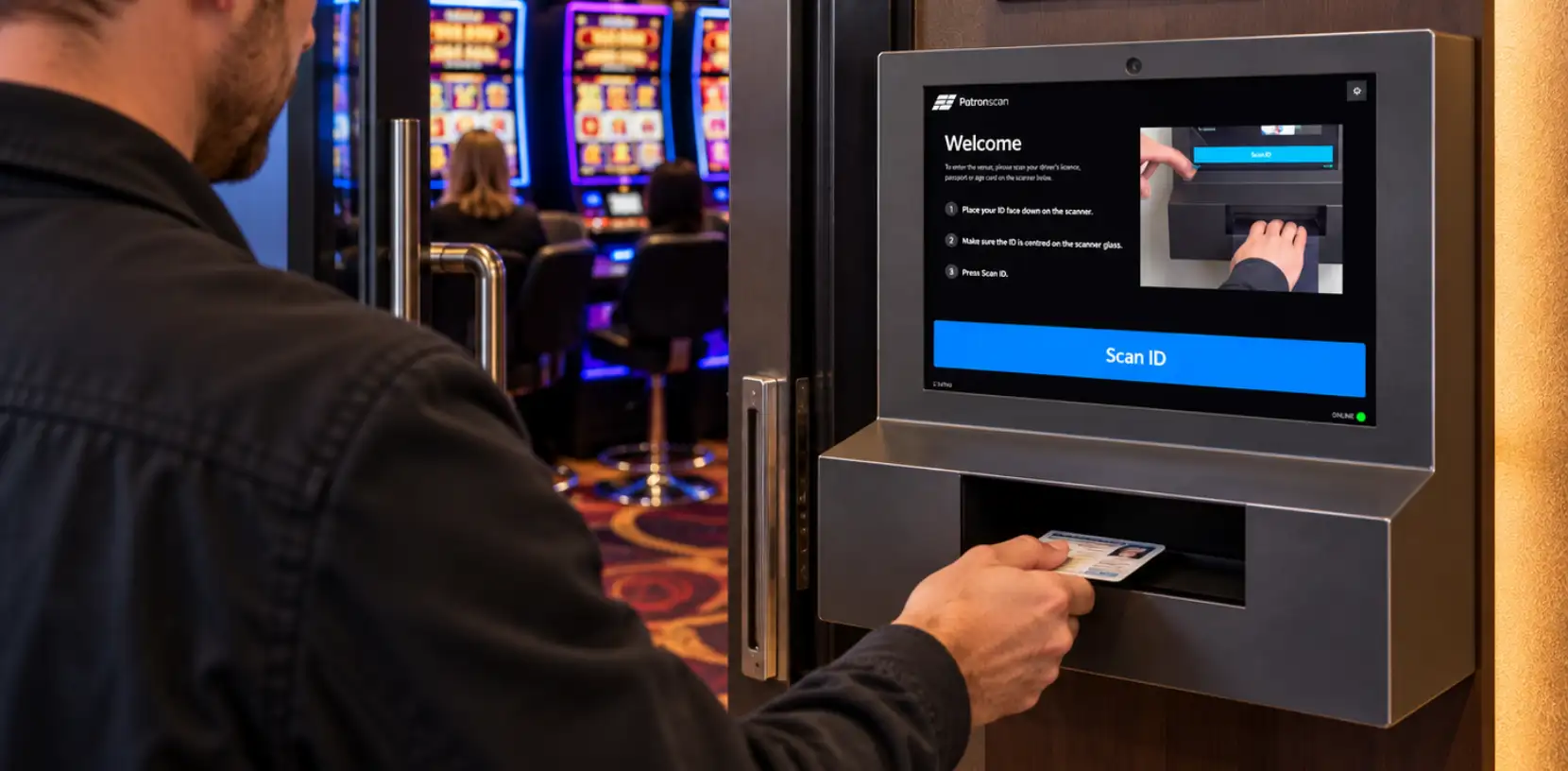
| Beer caves, coolers and age-restricted areas | IVAC access control and Lite+ | Self-service scanners connect to electronic door locks and cooler systems, so only verified, age-eligible customers get in |
| Every location | Flag Network | A person flagged for theft or violence at one store is flagged at all your connected stores, with an alert to staff |
Fast age checks at the counter
Patronscan verifies tobacco and alcohol buyers, including vape customers, in under three seconds. It reads driver’s licenses, passports and other government-issued ID, then checks them under UV, infrared and white light. Counterfeits are caught by the scanner, not by a clerk’s eyesight or experience.
Lock down the beer cave and cooler doors
For even stronger protection, add IVAC at the door. A customer scans their ID; a pass releases the lock, while a fail keeps it closed and notifies staff. You can set different age thresholds for each access point, such as 21 for alcohol. Liquor stores use the same cooler-door setup: one liquor retailer reported a 96% drop in liquor theft after connecting Patronscan to its cooler doors.
One network for all your stores
For multi-store owners, every device syncs to a cloud dashboard, so you can manage all your stores from one place. Patronscan also offers API access for integration with existing POS and retail management systems. See all Patronscan products.
Key Features to Look for in an ID Scanner for Convenience Stores
The right system depends on your store. A single independent store may only need one countertop scanner, while a chain with dozens of locations also needs central management and reporting.
The right system depends on your store. A single independent store may need only one countertop scanner, while a chain with dozens of locations needs central management and reporting.
Not all age verification methods are equal. When comparing ID verification solutions, store owners should look for:
- Forensic fake ID detection. The scanner should check the front of the ID, not just the barcode, so it can catch sophisticated fakes. Learn how Patronscan detects fake IDs.
- Automatic age calculation. A clear underage or of-age result removes date-of-birth math at the register.
- Broad ID coverage. Customers show licenses from other states and provinces, passports, military IDs and mobile IDs where legally accepted. Patronscan supports 14,000+ ID and document types.
- Speed. Fast age checks keep lines moving and happy customers coming back.
- Scan records. Each scan should be logged so you can prove the check happened.
- Simple training. New hires should be able to use it correctly from their first shift.
- Multi-location management. One dashboard to sync every entrance, every device and every location.
- Integrations. Connections to CCTV, POS systems, alarm platforms and door locks.
- Reporting. Managers should be able to see that scanners are actually being used. Patronscan includes daily, weekly and monthly reports and an online admin portal.
- Support. Ask what happens when an employee has a problem mid-shift. Patronscan offers 24/7 technical support.
Compliance and Data Privacy: Stay Compliant with Every Scan
ID scanning helps retailers prove compliance with age restrictions and avoid compliance issues.
- A defensible audit trail. Each scan creates a timestamped record with the document type and verification result. If a regulator sting, liability claim or loss-prevention investigation comes up, you have documentation instead of a clerk’s memory.
- Consistent across every shift. Every employee follows the same verification process, every time.
- Data privacy built in. Patronscan collects only the information needed for identity verification and access control. Personal information is encrypted in transit and at rest, and Patronscan does not sell personal information for money. Retention settings are configurable to meet local requirements; for example, non-flagged customer data is retained for 21 days in the U.S. Read the full Patronscan privacy policy.
An ID scanner supports your compliance program; it doesn’t replace staff training or knowledge of your state’s laws. Some states require or encourage electronic ID scanning for certain alcohol sales, so check your state and local rules on restricted sales and on scanning and storing ID data. Patronscan’s state-by-state resources are a good place to start.
What age verification records should convenience stores keep?
Keep enough to prove each check happened, and no more. A useful record for every age-restricted sale shows:
- The date and time of the check
- The type of ID presented and its issuing state or country
- The result: approved, underage, expired or flagged
- The store and register or door where the check happened
Patronscan logs each scan with a photo, timestamp, document type and verification result automatically. Keep staff training records and refusal logs alongside, and check whether your state sets a retention period.
Does an age verification system store customer data?
Most ID scanners store some data, so ask any vendor exactly what. According to its privacy policy, Patronscan can capture the details printed and encoded on the ID (such as name, date of birth, address, document number and expiry date), images of the ID, the verification result, and the date, time and location of the scan. A facial image is captured only where the business has turned on facial comparison features. How long scan records are kept follows the business’s settings, within legal limits.
How to protect customer privacy when verifying age
- Tell customers why you scan. Post a sign at the counter or door explaining that IDs are scanned for age verification.
- Collect only what you need. Use scan data for age verification and security, not marketing.
- Keep retention short. Set retention to the shortest period your state rules and business needs allow.
- Limit access. Give only managers access to scan records, and use role-based logins.
- Choose a secure vendor. Patronscan encrypts personal information in transit and at rest, uses role-based authentication and multi-factor authentication, and does not sell personal information for money.
- Have a process for requests. Customers can ask what data was collected; Patronscan offers a disclosure request process and a flag dispute process.
Convenience Store FAQ: Age Verification and ID Checks
Do convenience stores have to check ID for tobacco?
Yes. Federal law bans tobacco sales to anyone under 21, and the FDA says retailers must verify age with photo ID for every customer under 30 who tries to buy tobacco products. State and local laws may be stricter.
When can age verification be skipped for age-restricted purchases?
For tobacco, federal rules require a photo ID check only for customers under 30, so staff don’t have to check a customer who is clearly older. State or local law may be stricter, and many stores choose to check every customer to remove guesswork. For alcohol, the rules are set by each state, but the store is responsible if a minor is served. That is why many retailers check anyone who looks under a set age, or simply scan every ID.
Which states do not require age verification?
None. Every state bans selling alcohol to anyone under 21, and the federal minimum age of 21 for tobacco, along with the photo ID rule for customers under 30, applies in every state. What differs is the detail: how states enforce ID checks, what penalties apply, and whether electronic ID scanning is required, encouraged or optional.
How does a vape vending machine check a customer's ID and age?
Under federal rules, tobacco products, including e-cigarettes, may only be sold from vending machines in facilities where no one under 21 is present or allowed to enter at any time. The FDA applies this to all tobacco vending machines, even those with built-in age checks, and many states add their own limits. Age-verifying machines typically ask the customer to scan a government-issued ID before unlocking a sale, but they don’t make a machine legal in a space open to minors. To keep an age-restricted area adults-only, a self-service ID scanner like Patronscan Lite+ can control the door, so only verified, age-eligible customers get in.
Can an ID scanner detect fake IDs?
A forensic scanner can. Patronscan checks the barcode, the front of the ID and, where present, the machine-readable zone, then flags anything that doesn’t match the expected pattern, including altered birthdates. A barcode-only scanner can be fooled by a fake ID with a matching barcode.
What IDs can Patronscan scan?
Patronscan supports 14,000+ ID and document types, including driver’s licenses from all U.S. states and Canadian provinces, passports and e-passports, military and federal IDs, and mobile IDs where legally accepted.
Is customer data secure?
Patronscan encrypts personal information in transit and at rest, and retention settings are configurable to meet local requirements. See the privacy policy for details.
Do I still need to train staff?
Yes, but less. Patronscan takes about five minutes to learn, and the clear pass/fail result means staff no longer have to judge IDs on their own.
Check Every ID with Confidence
No retailer can afford to guess on every age-restricted sale. A forensic ID scanner gives your team fast, consistent age checks, catches fake IDs a person would miss and builds a compliance record for each sale.
Patronscan helps c-store owners verify age at the counter, control access to beer caves and coolers, and connect all their stores on one network, so the team can operate with confidence on every shift.
Request a demo or get a quote to see how Patronscan fits your store.
Featured Resources