Common causes include serving minors, accepting fake IDs, overserving, disorderly conduct, exceeding capacity and repeat violations. In the College Park case, the Prince George’s County board cited all of these across 37 incidents.
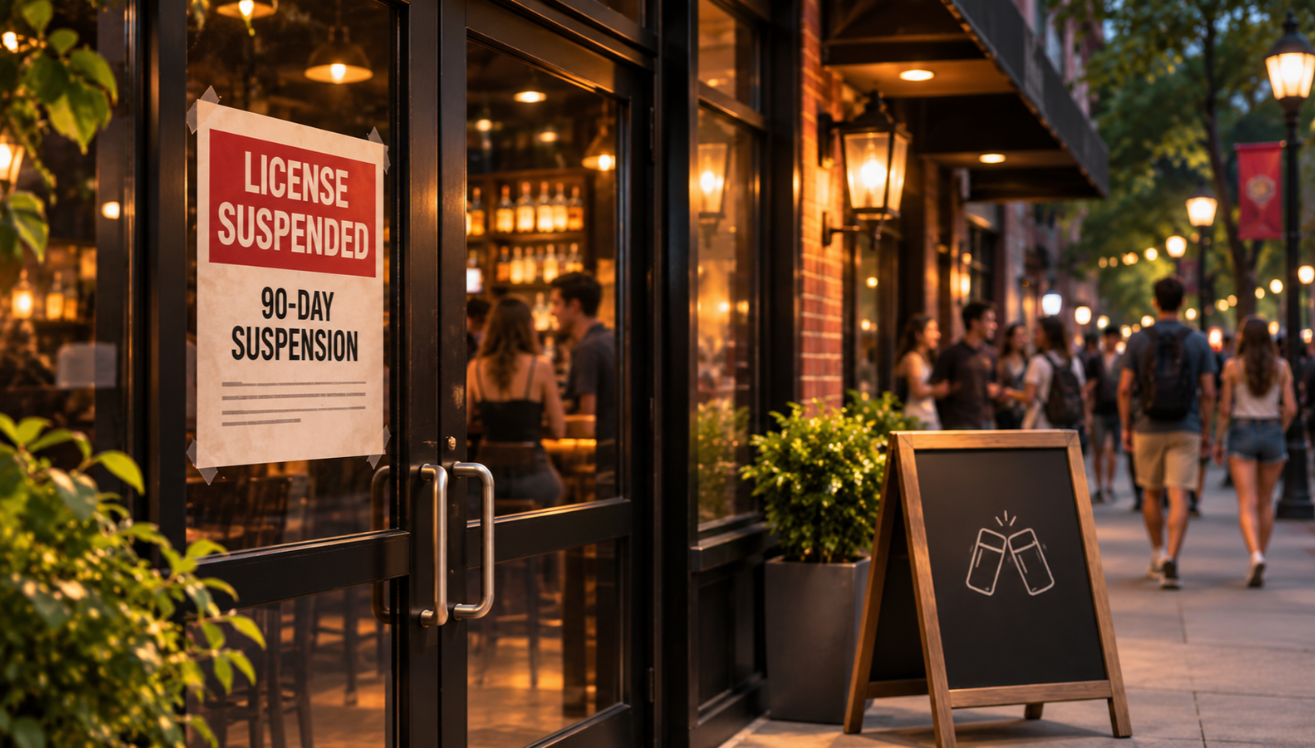
A liquor license suspension just closed a popular bar near the University of Maryland for the busiest stretch of the year. The Prince George’s County Board of License Commissioners suspended a College Park bar’s license for 90 days and fined it $7,500, according to WJLA. The suspension started Oct. 30, 2026, and is expected to run to Jan. 28, 2027, through Thanksgiving, Christmas and New Year’s.
This week, a 107-page investigative report behind the decision made headlines. It documents 37 incidents over about two years, including underage drinking, fake identification and repeated violence. For any owner who runs a busy door, it is a clear look at how a license gets lost, and what a board expects to see before it does.
What led to the College Park liquor license suspension?
The county’s liquor board acted after an investigation that ran from January 2024 to February 2026. Its decision was based on video evidence and testimony from four University of Maryland police officers, WJLA reported.
| Detail | What the record shows |
|---|---|
| Regulator | Prince George’s County Board of License Commissioners |
| Penalty | 90-day suspension plus a $7,500 fine |
| Suspension dates | Oct. 30, 2026 to about Jan. 28, 2027 |
| Investigation period | January 2024 to February 2026 |
| Incidents documented | 37, involving University of Maryland Police |
| Violations cited | Underage patrons, sales to underage customers, fraudulent identification, overserving, disorderly conduct, ambulance transports, exceeding approved capacity |
| Prior penalty | $1,500 fine in March 2025 for underage sales and alcohol-awareness violations |
| Request to pause | Rejected unanimously by the board on Oct. 27; a county circuit judge denied a restraining order on Oct. 30 |
| Jobs at risk | The bar warned that about 70 employees could be laid off |
The board’s Oct. 27 agenda shows the bar had asked for the penalty to be stayed while it sought judicial review. FOX 5 DC reported the business said it is “not permanently closing” and is pursuing its legal options.
What did the liquor inspector’s report find?
Chief liquor inspector Robert Clark presented the 107-page report at a Sept. 9 board meeting, The Banner reported after obtaining it through a public records request. It cites “recurring failures in alcohol awareness compliance, age verification enforcement” and says gaps in supervision were linked to escalating violence.
The incidents it describes include:
- Heavily intoxicated 17-year-olds, some unconscious and taken to hospital
- An underage patron whose blood alcohol level paramedics described as in the “lethal range”
- Multiple underage patrons reportedly drinking 8 to 15 shots
- A fake ID confiscated by police
- Repeated head injuries, staff being spit on and a patron struck in the head with a bottle
In seeking relief from the penalty, the bar’s attorney proposed electronic ID scanning, expanded alcohol-awareness training and more security staff as corrective steps, according to WJLA. The board did not pause the suspension.
What this liquor license suspension means for bar and nightclub owners
- Patterns get punished, not single nights. The board looked at 37 incidents over two years, plus an earlier fine. Every small lapse at the door becomes part of the file.
- Age verification is on trial. The inspector named age verification enforcement as a recurring failure. A quick glance at a card is hard to defend when minors end up in the hospital.
- Fixes offered after the fact carry less weight. ID scanning, training and extra security were proposed once the penalty was on the table, and the board still did not pause it.
- Violence and age checks are linked. The same report that cites underage drinking also documents fights and injuries. Knowing who is inside, and who has caused trouble before, affects both.
- The cost lands at the worst time. A 90-day closure that spans the holidays can mean lost revenue, cancelled events and staff layoffs.
How to avoid a liquor license suspension: a door checklist
Most liquor license advice centers on training staff to spot fakes and not overserving. The College Park case shows a board also weighs consistency and records over time. Use this list with your door and floor teams:
- Check every guest’s ID at the door, every night, with no exceptions for regulars or busy lines.
- Authenticate the card itself. A good fake passes a glance, especially under door lighting.
- Keep a dated record of every entry and every refusal, so you can show the board what your door actually did.
- Log incidents (fights, medical calls, ejections) the same night, with names and times.
- Keep a ban list that every door person and every location can see, and enforce it.
- Track your headcount against your approved capacity.
- Train and certify every server and security staffer, and refresh it before peak nights like Halloween and New Year’s.
- If you get a warning or a small fine, fix the process right away. In this case, a $1,500 fine in 2025 came before the 90-day suspension.
How Patronscan helps venues protect their liquor license
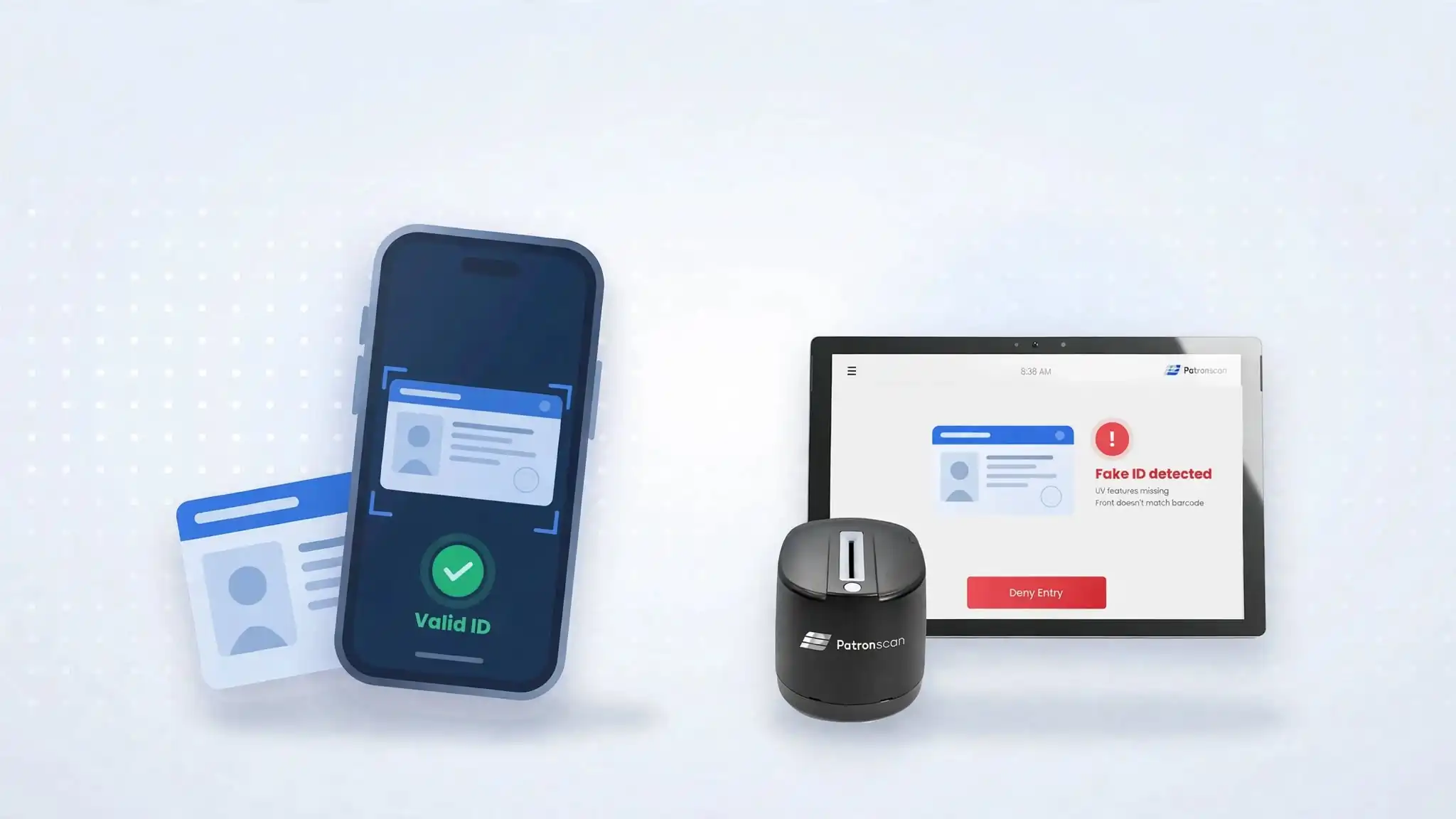
Patronscan gives owners a way to know exactly who is walking through the door, and to prove it later. It works before a board ever opens a file, not after.
| Risk named in the College Park case | How Patronscan helps |
|---|---|
| Underage guests getting in with fake IDs | Forensic ID scanning checks 8,500+ data points across 14,000+ ID types in seconds, catching fakes a visual check misses. |
| “Age verification enforcement” failures | Every scan creates an encrypted, timestamped record, so you can show a licensing board who was checked and when. |
| Repeat violence and problem patrons | The flag network bans a problem guest across every location in your network, so a ban doesn’t live in one bouncer’s memory. |
| Staff missing red flags on a packed night | Real-time alerts tell your team when a fake ID or a flagged person is scanned. |
| Busy doors and high staff turnover | The Guard+ countertop scanner keeps the main door fast, and the Handheld scanner covers lines, patios and side entrances. |
Scanning is not a cure for overserving, so pair it with strong service training. But when a board asks what your door did, a scan record is the answer. Request a demo to see how Patronscan protects your license before a bad night becomes a file.
Liquor license suspension: frequently asked questions
How long does a liquor license suspension last?
It depends on the state, the board and the record. In this case, the board imposed a 90-day suspension plus a $7,500 fine, after an earlier $1,500 fine.
Does a fake ID protect a bar that served a minor?
Not reliably. Penalties and defenses vary by state, and a board will look at what your staff did to check the ID. A dated scan record of the check helps show that your door followed its process.
Can a bar keep operating while it appeals a suspension?
Generally, only if the board or a court grants a stay; the rules vary by jurisdiction. Here, the board rejected the request to pause the suspension and a circuit judge denied a restraining order.
Do ID scanners help prevent a liquor license suspension?
They help with the age-verification piece. Forensic scanners catch fake IDs that a visual check misses, and they create a record you can show a licensing board. They do not replace training on overserving or security staffing.
Featured Resources