Auto finance fraud is any scheme to get a vehicle loan or lease through deception, such as a fake or stolen identity, a synthetic identity, or false income and employment details. The NICB puts U.S. exposure at $10.4 billion.
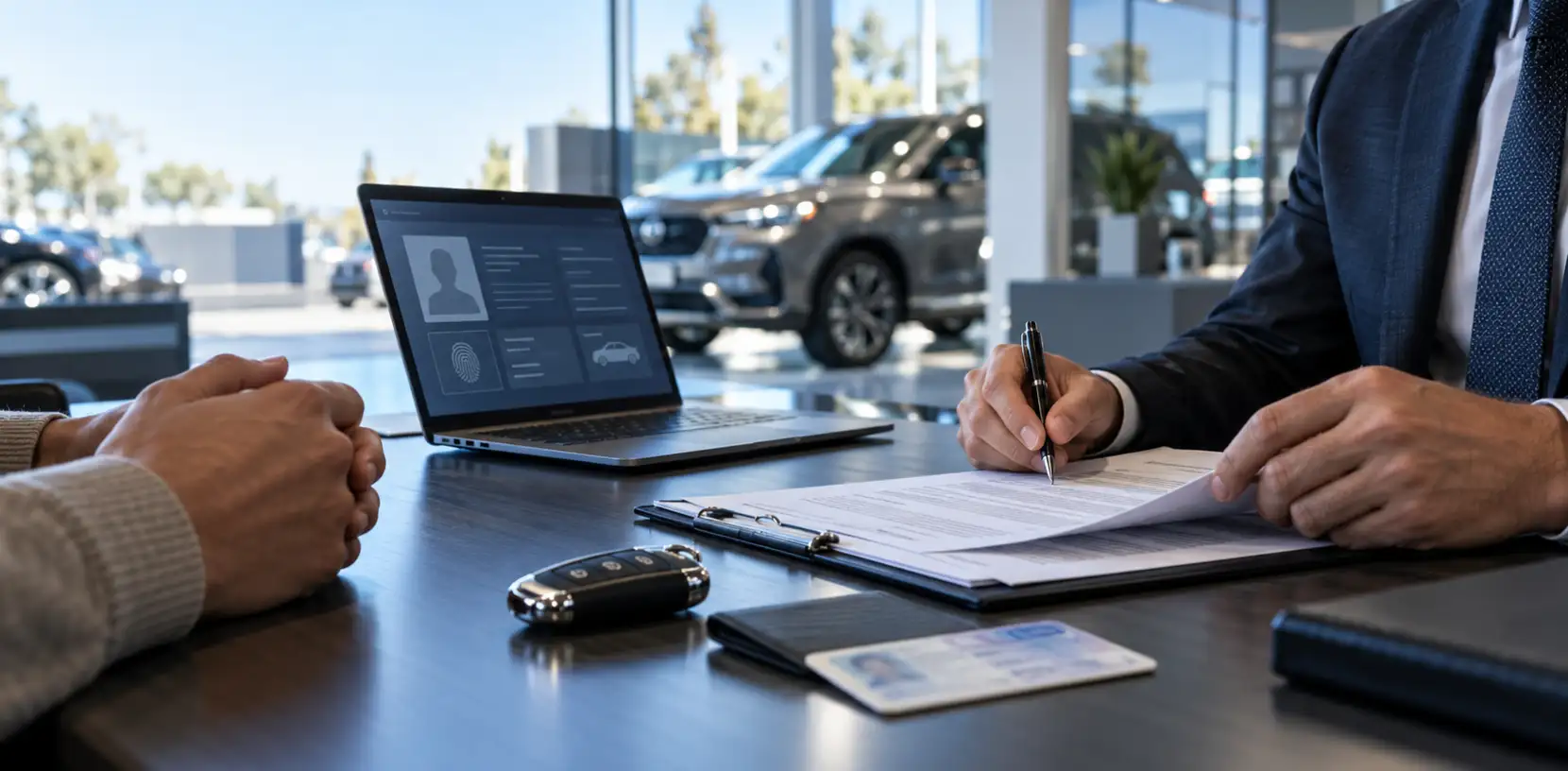
Auto finance fraud has grown into a $10.4 billion problem, according to a new report from the National Insurance Crime Bureau (NICB) released October 19, 2026. The NICB expects losses to climb further this year. It says criminals are moving away from stealing cars off the street and toward financing them with fake, stolen or synthetic identities.
For dealerships, that shifts the front line to the sales desk and the F&I office. The NICB cites industry studies showing 77% of dealerships report more fraud over the past two years. It also notes that synthetic identities power an estimated 80% to 85% of identity-based vehicle financing schemes. Below, we break down the numbers, what they mean for your stores, and where a forensic ID check fits.
What Did the NICB Report Find About Auto Finance Fraud?
The NICB, a nonprofit that works with insurers and law enforcement on insurance crime, says vehicle finance fraud “has evolved from isolated credit misrepresentations into an organized, digital criminal industry,” according to NICB Chief Operating Officer Timothy R. Slater in the NICB’s announcement. The key figures:
| Finding | Figure |
| Estimated national fraud exposure in auto lending | $10.4 billion, projected to rise in 2026 |
| Auto loan defaults that may be linked to fraud | Up to 24% (industry studies) |
| Dealerships reporting more fraud over the past two years | 77% |
| Share of vehicle finance fraud that is first-party fraud | Nearly 70% |
| Identity-based financing schemes powered by synthetic identities | 80% to 85% |
| Default rate of likely synthetic-identity borrowers | 12.5x typical consumers |
| Average loss per synthetic identity case | $22,000 to $50,000 |
| Rise in suspected credit washing, early 2024 to mid-2025 | 228% |
The report also flags a blind spot: federal crime definitions exclude fraud- and forgery-based vehicle acquisitions from motor vehicle theft statistics. A car driven off the lot on a fraudulent loan may never show up as a “stolen car.”
The Schemes Behind the Numbers
- Synthetic identities: made-up people built from a mix of real and fake data, used to open credit and finance vehicles.
- First-party fraud: buyers who misrepresent income, employment or intent to pay, using their own or a synthetic identity.
- Sign-and-walk rings and credit bust-outs: applicants submit inflated or AI-fabricated pay stubs, then default.
- Credit washing: forged FTC identity-theft affidavits and fake police reports used to wipe negative accounts and qualify for new financing.
On the policy side, the NICB points to Oklahoma House Bill 3244, recently enacted with aggravated identity theft penalties and enhanced data-sharing, and supports Minnesota H.F. 3826, which would expand prosecutors’ subpoena power and criminalize forged digital likenesses.
What Does Vehicle Finance Fraud Mean for Dealerships?
The NICB’s Slater says this fraud “touches dealerships, lenders and insurers.” For a dealer group, the practical takeaways are:
- The person across the desk is the new risk. As traditional theft falls, fraudsters are getting vehicles through the front door with paperwork, not a slim jim.
- Fraud often surfaces after funding. Experian research on dealers found fraud is often spotted after the deal, through skip borrowers, unrecoverable vehicles or early payment defaults. By then the car is gone.
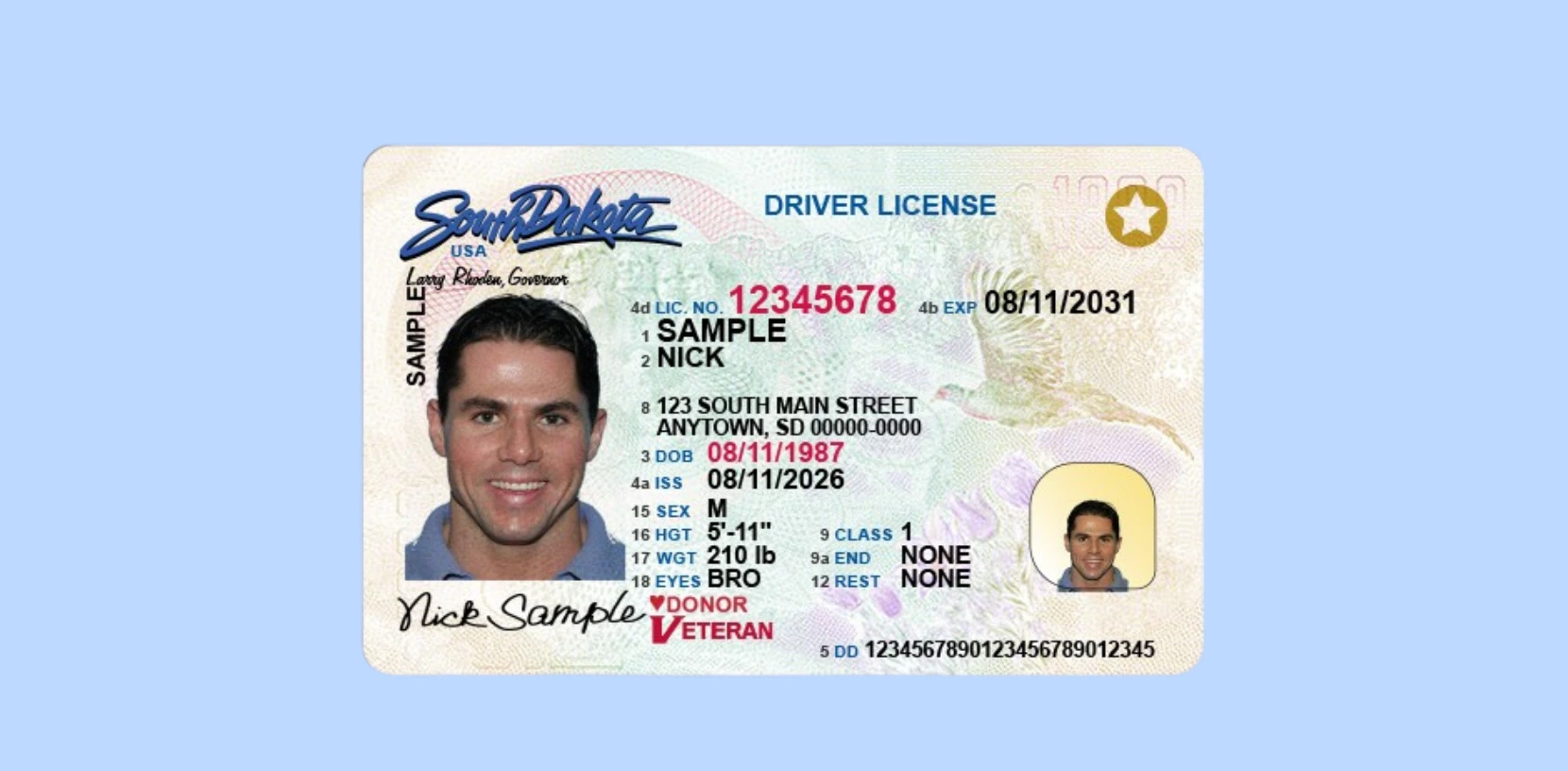
- Manual ID checks are still common. The same research found “license scanners, photocopies, and visual ID checks remain common.” A photocopy proves you saw a card, not that the card was real.
- Repeat players move between rooftops. Organized rings that get turned away at one store can try the next one in the group the same week.
- Scrutiny is rising. Insurance Business advises that underwriters may look harder at dealers’ identity verification and fraud controls at renewal.
- Documentation matters. When a deal goes bad, a clear record of who presented which ID, and when, helps with lender disputes, insurance claims and police reports.
How can Dealers Prevent Auto Finance Fraud at the F&I Desk?
No single tool stops every scheme in the NICB report. A forensic ID scan confirms the physical ID is genuine and unaltered; it does not verify a pay stub or someone’s intent to pay. That is why it works best as the first layer, done the same way on every deal. A simple staff checklist:
- Scan the customer’s ID before a test drive, a credit application, or a key handoff, not after.
- Make sure the name, date of birth, and address on the scanned ID match the credit application exactly.
- Treat an out-of-state or unfamiliar ID as a reason to slow down, not skip the scan.
- Watch for pressure tactics: rushing to sign, insisting on same-day delivery, or a co-signer who won’t come in.
- Compare income documents against the stated employer and verify with a call when anything looks off.
- Escalate any failed or suspicious scan to a manager before the deal moves forward.
- Keep the scan record with the deal file so you can answer lender, insurer, or police questions later.
- Share flagged individuals across every rooftop in your group.
How Patronscan Fits In
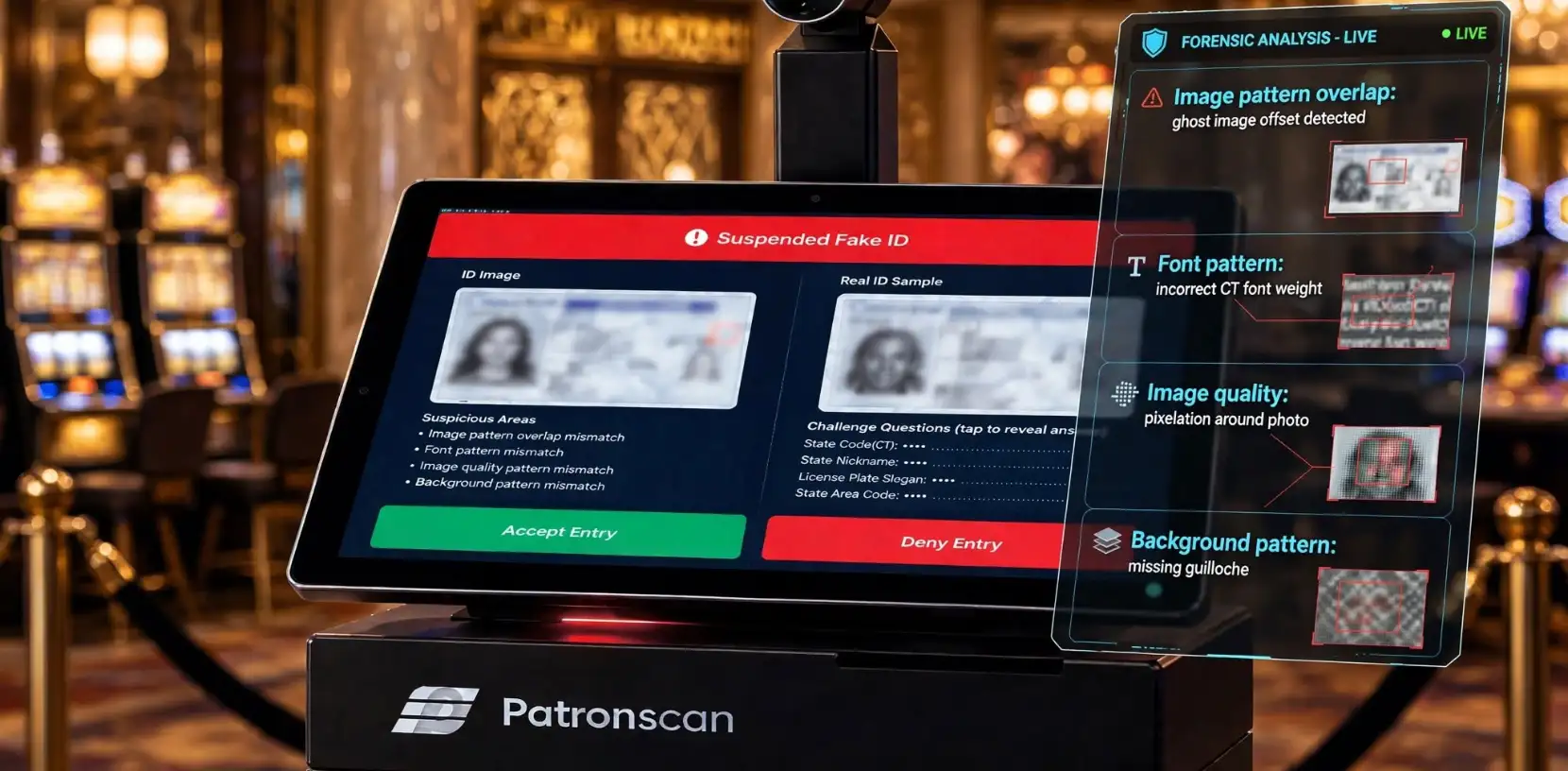
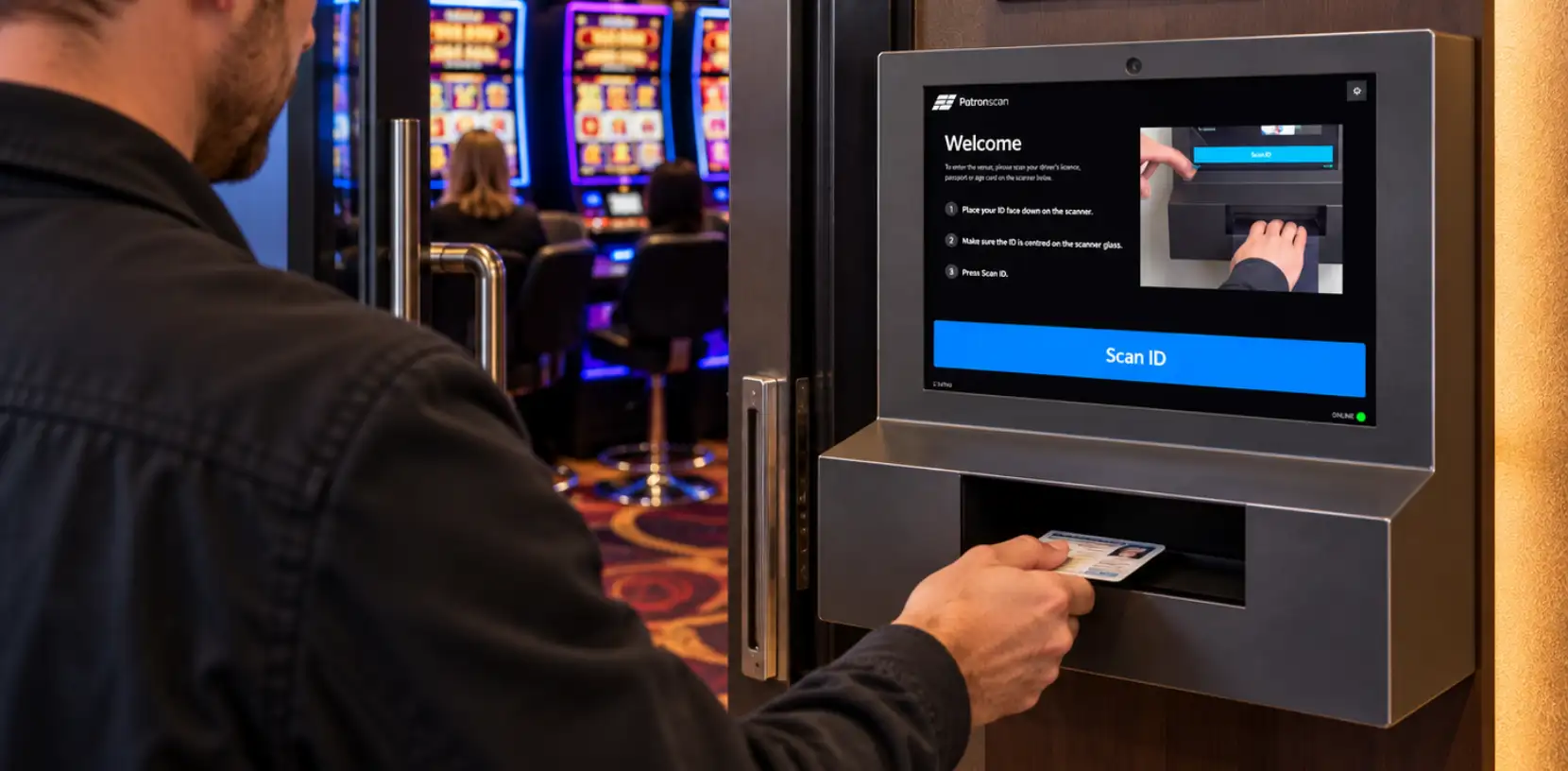
Patronscan helps dealerships know exactly who is sitting across the desk before the keys leave the building. Our forensic ID scanning checks more than 8,500 data points across 14,000+ ID types to spot counterfeit and altered IDs that pass a visual check or a photocopy.
| Fraud risk from the NICB report | How Patronscan helps |
| Fake or altered IDs used to support stolen or synthetic identities | Forensic authentication of 8,500+ data points flags counterfeit and tampered IDs in seconds |
| Fraud discovered weeks after funding | Every scan creates an encrypted, timestamped record you can attach to the deal file for lenders, insurers and police |
| Rings that try one rooftop, then the next | The flag network bans a flagged person across every location in your dealer group |
| Busy weekends and inconsistent manual checks | Real-time alerts tell staff immediately when an ID fails or a flagged person is scanned |
| Test drives with no record of who took the car | The Handheld scanner verifies an ID on the lot before a key handoff; the Guard+ countertop scanner covers the sales desk and F&I office |
Want to see how a forensic ID check fits into your sales and F&I process? Request a demo.
Auto Finance Fraud FAQ
What is synthetic identity fraud at car dealerships?
A synthetic identity mixes real and fabricated personal data to create a person who doesn’t exist. The NICB says synthetic identities power 80% to 85% of identity-based vehicle financing schemes, and those borrowers default at 12.5 times the rate of typical consumers.
What is credit washing?
Credit washing is when someone files false identity-theft claims, such as forged FTC affidavits or fake police reports, to remove legitimate negative accounts from their credit report and qualify for new financing. The NICB says suspected cases rose 228% between early 2024 and mid-2025.
Can an ID scanner stop auto finance fraud?
An ID scanner can’t stop every type, since it won’t catch a fake pay stub. A forensic ID scanner can catch counterfeit or altered IDs at the start of a deal, create a record of who presented them, and flag repeat offenders across locations. Combine it with income verification and lender fraud tools.
When should a dealership scan a customer's ID?
Before any key handoff or credit application: at the start of a test drive, at the sales desk, and again at F&I if a different person or ID shows up. Scanning every customer the same way keeps checks consistent and avoids singling anyone out.
Featured Resources