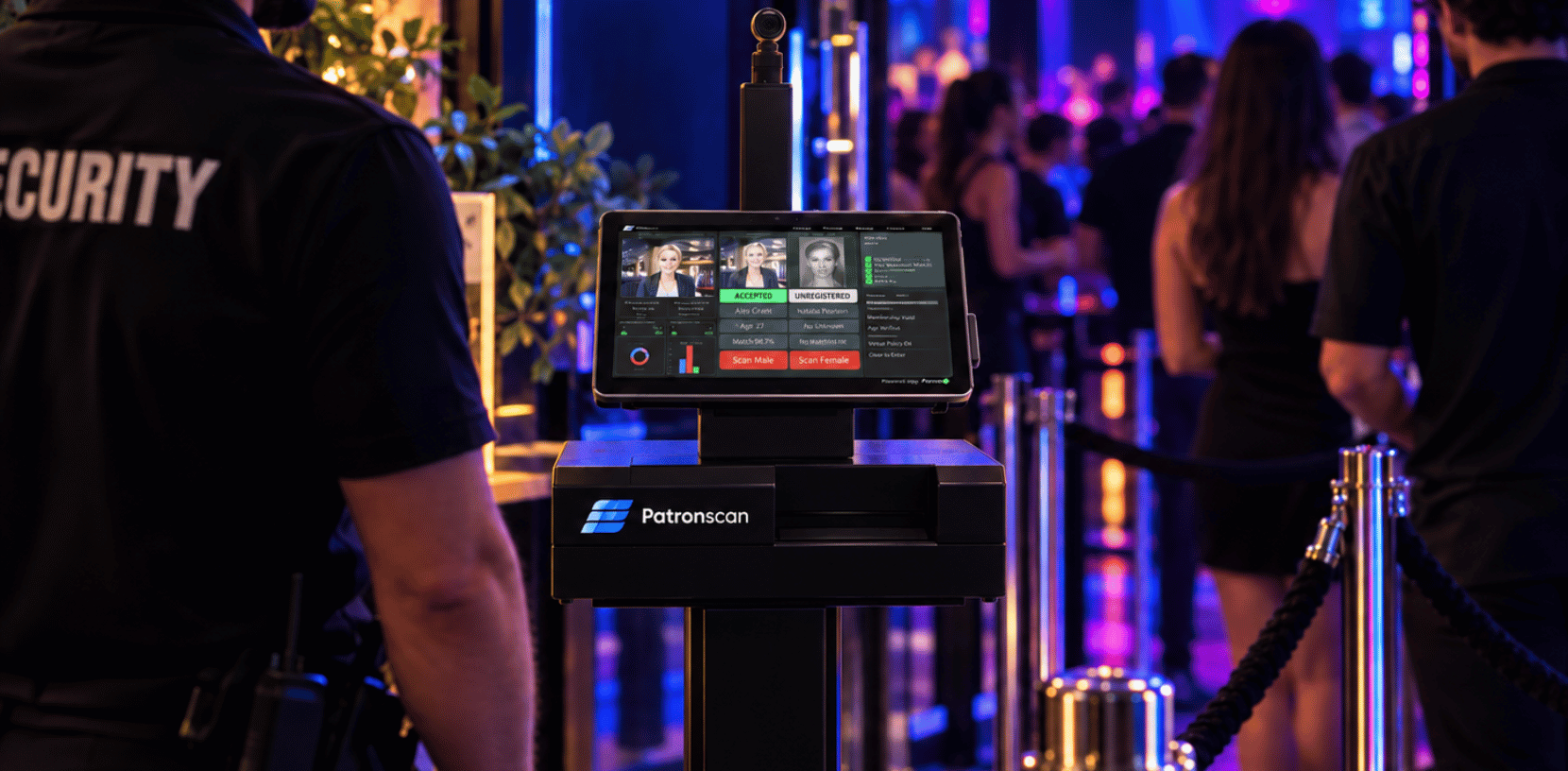
For decades, the job at the door came down to a trained eye: hold the ID under the light, glance between the photo and the face, check the birthdate math, wave them through or turn them away. In 2026, that instinct is no longer enough. Criminals aren’t showing up with a laminated fake from a college dorm room anymore. They are showing up with a “persona kit,” a bundled, AI-generated identity built specifically to survive human inspection and beat basic scanners at the same time.
What’s Actually in a Persona Kit
Security researchers describe persona kits as exactly what they sound like: a package deal. A synthetic, AI-generated face. A cloned voice sample. A fabricated backstory and supporting digital footprint. Sometimes a matching fraudulent document to go with it. On dark web marketplaces, these bundles, part of a maturing “Deepfakes-as-a-Service” economy, sell for as little as $5 for a basic package, with more sophisticated, turnkey kits going for a few thousand dollars. Identity platform Persona detected more than 75 million AI-based spoof attempts in 2024 alone, and a 2025 Gartner survey found 62% of organizations had experienced a deepfake-enabled social engineering attack in the prior 12 months.
This isn’t a niche curiosity anymore. It’s a supply chain.
The Data Behind the Shift
Three of the most-cited fraud research groups tracking 2026 trends all point in the same direction.
Sumsub’s Identity Fraud Report 2025-2026 found that synthetic identity is now the single largest first-party fraud scheme, at 21% of cases, ahead of chargeback abuse (16%) and application fraud (14%). Synthetic identity document fraud spiked 311% in North America compared to Q1 2024, the region’s most alarming growth vector. AI-assisted document forgery, powered by tools like ChatGPT, Grok, and Gemini, jumped from effectively 0% to 2% of all falsified documents Sumsub processed in a single year, with double-digit growth projected through 2026. Put plainly: roughly 1 in 50 fake documents crossing a verification system today was generated by AI, and that ratio is climbing fast.
PwC’s 2026 fraud outlook names synthetic identities and deepfakes as the defining fraud trend of the year, warning that AI-powered data generation tools now let fraudsters “automate the creation of plausible identities at scale”, mixing breached data with fabricated documents and digital footprints convincing enough to pass onboarding checks that rely on a single document scan. PwC’s core warning for anyone doing identity checks: verification that stops at “does the document look real” is no longer a real control.
ID.me’s 2026 Identity Fraud Landscape Report, alongside a June 2026 audit by AI or Not, found that five publicly available AI image models (including Google’s Gemini “Nano Banana,” ChatGPT’s image generator, Grok, and Imagen 4 Ultra) could already produce government ID images convincing enough to fool a trained human reviewer. Separately, researchers at Palo Alto Networks’ Unit 42 showed that someone with little image-editing experience could build a synthetic identity convincing enough for a live video interview in about an hour, on a consumer laptop. Fraud detection firm AU10TIX went a step further, reporting that in Q1 2026, AI-generated fraud attempts surpassed physical forgeries for the first time across its entire transaction base.
Why a Bouncer’s Eyes Aren’t the Bottleneck Anymore. The Scanner Might Be, Too
Here’s the uncomfortable part for door security: this isn’t just a “humans can be fooled” problem. Plenty of basic ID scanners on the market today only check what’s printed and encoded on the surface: the barcode data, maybe a magnetic stripe read, a visual comparison. A persona kit is built to beat exactly that layer. If the fabricated document has a barcode that scans “clean” and a photo that matches the face standing at the door, a surface-level check has nothing left to catch.
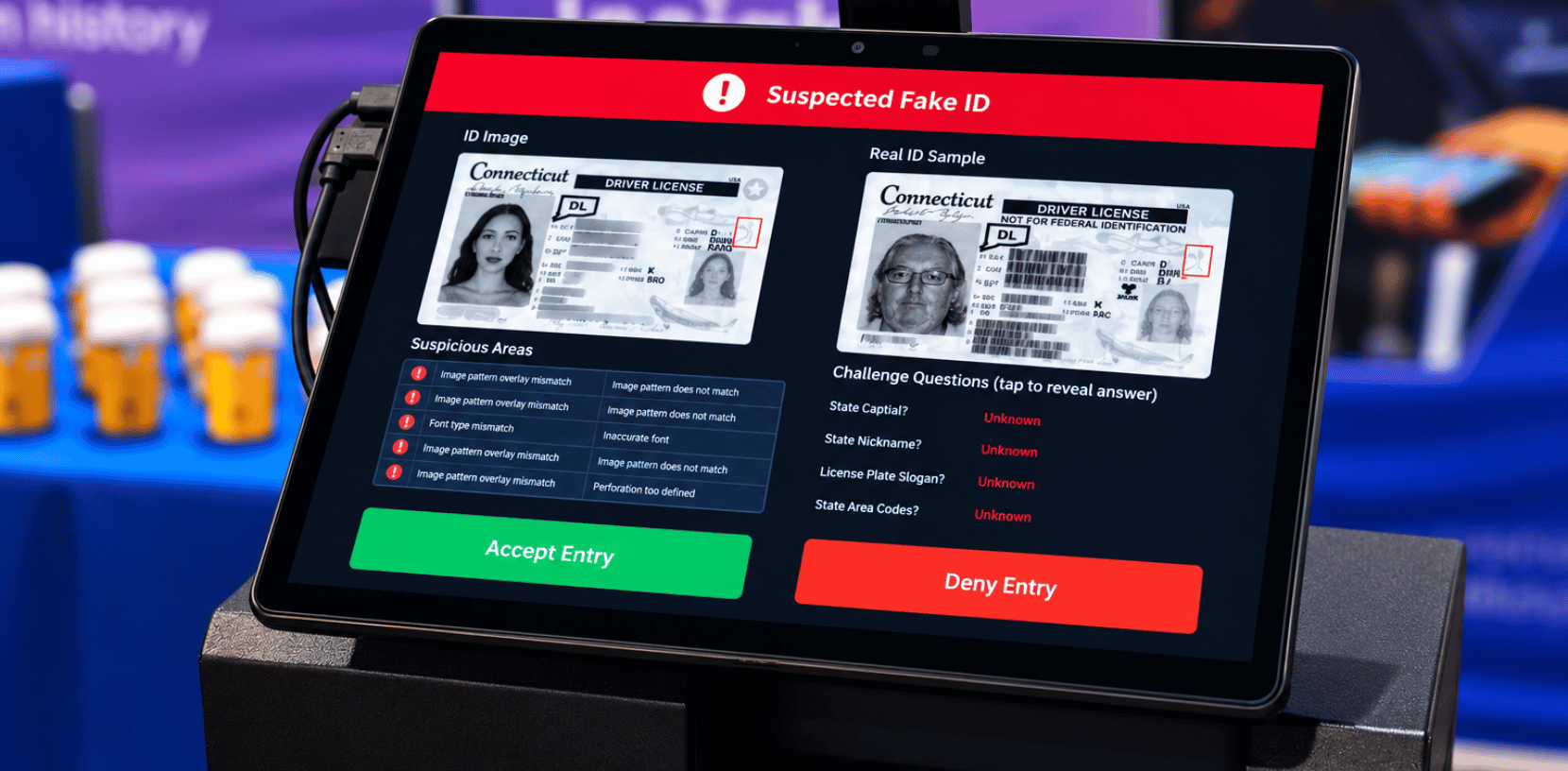
What it can’t easily fake is what’s underneath: the cryptographic security features embedded in a genuine document, the exact font spacing and micro-printing patterns state issuers use, UV overlay behavior, and whether the barcode’s encoded data actually matches AAMVA formatting standards for that specific state and ID version. That’s a forensic check, and it’s the layer AI-generated documents are built to slip past undetected, because most fraud is designed to beat the layer above it, not the layer no one’s looking at.
What Actually Catches a Persona Kit: Document-Level, Forensic Authentication
This is exactly the gap Patronscan’s forensic ID scanning is built to close. Rather than trusting a barcode read or a visual match alone, Patronscan analyzes over 8,500 data points across more than 14,000 ID and document types, cross-checking AAMVA formatting, cryptographic hashes, font spacing, and UV overlay patterns, all the layers a synthetic or AI-generated document is least equipped to replicate convincingly, because they’re not designed to be seen by a human at all.
When a flagged or fraudulent ID is caught at one venue, Patronscan’s flag network can also push that alert to every other connected door in the group in real time. The same “flag once, protect everywhere” model already running in cities like downtown Tucson, where a shared scanner network lets venues warn each other about bad actors the moment they’re identified.
What This Means for Door Security Tonight
The uncomfortable truth for 2026 is that a confident bouncer and a barcode-only scanner are no longer a full defense, they’re one layer of a defense that needs another layer underneath it. Visual-only door checks were built for an era when a fake ID meant a bad laminate job, not a $5 AI-generated persona kit assembled to specifically beat that exact check. Bar and venue operators who want their door to hold in 2026 need document-level, forensic authentication behind whoever’s standing at the front of the line.
Want to see how Patronscan’s forensic scanning catches what a visual check and a basic scanner miss? Book a demo or explore Patronscan’s ID scanner for bars and clubs to see it in action.