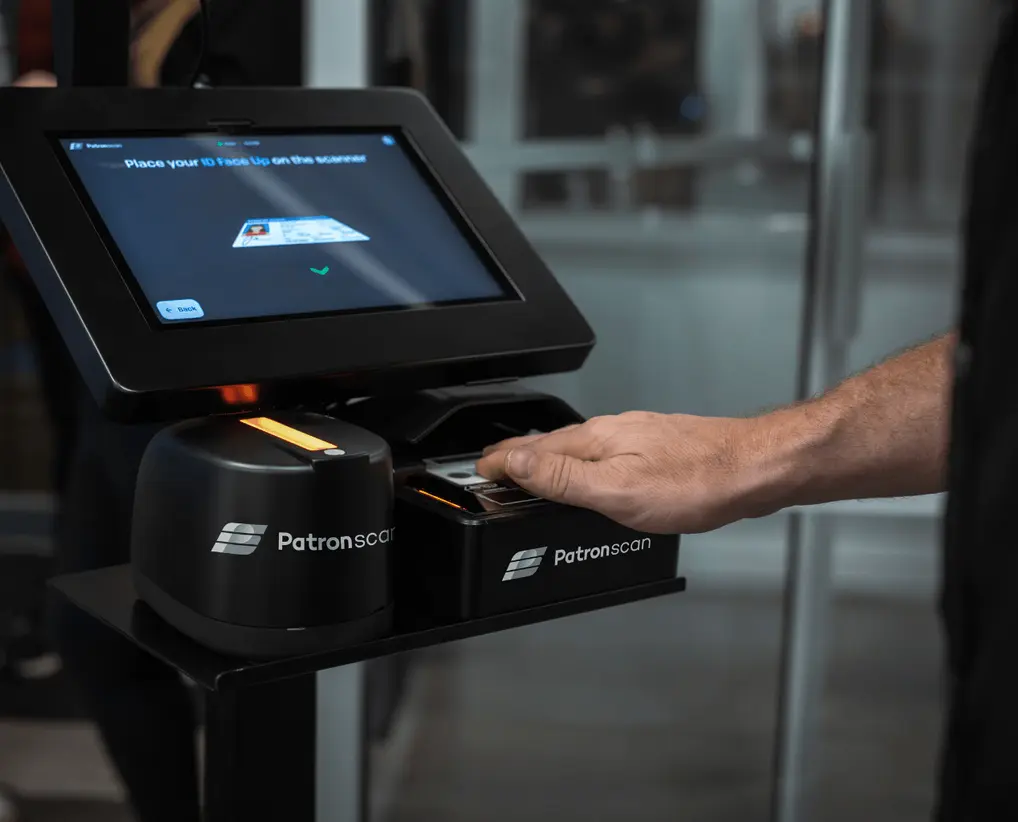
Texas's ID scanning laws are clear: scan every ID for covered off-premise alcohol sales, and use a reliable system that can identify valid government IDs.
Senate Bill 650: Electronic Age Verification Requirement
In 2023, Texas passed Senate Bill 650, which introduced a mandatory electronic ID scanning requirement for off-premise alcohol sales. The law requires sellers to visually inspect and scan a buyer’s ID using an electronic reader, or manually enter the ID’s information into an electronic reader, to verify the buyer is 21 or older.
The law applies to the following TABC-licensed business types that sell alcohol for off-premises consumption:
- Package Store Permit (P)
- Wine Only Package Store Permit (Q)
- Wine and Malt Beverage Retailer’s Off-Premise Permit (BQ)
- Retail Dealer’s Off-Premise License (BF)
- Wine and Malt Beverage Retailer’s Permit (BG)
- Retail Dealer’s On-Premise License (BE)
Important exception: Businesses that operate a restaurant or hold a Brewpub License (BP) on the premises are exempt from the mandatory scanning requirement.
Source: TABC Age Verification – tabc.texas.gov
Key Dates
- September 1, 2025: Mandatory ID scanning requirement takes effect for covered off-premise sellers.
- September 1, 2027: TABC begins enforcing administrative penalties against businesses for violations. Businesses have a two-year transition window between the law taking effect and TABC disciplinary action starting.
When Internet Access Is Unavailable
If a seller cannot access the internet to scan the ID electronically, they must visually inspect the ID to verify the buyer’s age. Sellers should accept a government-issued ID they reasonably believe is valid and accurately describes the person.
Recommended vs. Required
For bars, restaurants, breweries, wineries, and distilleries serving alcohol on-premises, Texas law does not require electronic ID scanning, but it is strongly recommended. Sellers who do check IDs at these establishments receive legal protection if they accept an apparently valid government-issued ID that turns out to belong to a minor who falsely misrepresented their age.
Criminal Penalties for Individual Sellers
An individual who violates the electronic age verification requirement when conducting a covered alcohol sale has committed a Class A misdemeanor under Texas law. It is the most serious misdemeanor classification in the state. Penalties include:
- Up to one year in county jail
- A fine of up to $4,000
Defense: It is a defense to criminal prosecution if the seller was unable to access the internet and could not perform an electronic scan, or if the buyer was 40 years of age or older.
Administrative Penalties for Businesses
Starting September 1, 2027, businesses that violate the age verification scanning requirement will be subject to disciplinary action from the Texas Alcoholic Beverage Commission (TABC). Administrative consequences can include:
- Substantial fines per violation
- License suspension or revocation
- Increased scrutiny, compliance checks, and sting operations
Protection from TABC disciplinary action: A business is protected from administrative action if the seller accessed the electronically readable information on the buyer’s ID and the scan device confirmed the ID as valid and the buyer as 21 or older. This is one of the strongest arguments for investing in a reliable ID scanning system.
Source: TABC Age Verification – Texas Alcohol Code Section 109.61
Criminal Classification
Under Texas Alcoholic Beverage Code Section 106.03, selling, serving, or delivering alcohol to a minor (anyone under 21) is a Class A misdemeanor. This applies equally to business employees and private individuals. The law is intentionally broad: both intentional and negligent violations can result in prosecution.
Penalties
- Fine: Up to $4,000 per violation (Texas Penal Code §12.21)
- Jail time: Up to one year in county jail
- Probation: Courts frequently impose probation for first-time offenders, which may include community service and mandatory completion of an alcohol education program
- Driver’s license suspension: 180 days to one year under Texas Transportation Code §521.343 — even if no vehicle was involved
TABC Administrative Consequences
Beyond criminal prosecution, businesses face significant administrative action from TABC:
- Administrative fines reaching thousands of dollars per violation
- Permit or license cancellation or suspension under TABC Code §11.61 and §61.71
- Enhanced penalties for repeat violations under Texas Penal Code §12.43
- Ongoing compliance checks and increased law enforcement scrutiny
Affirmative defense: A seller is protected from criminal liability if a minor falsely represented themselves as 21 or older by displaying an apparently valid government-issued ID with a physical description and photo consistent with their appearance, AND the seller used an electronic ID scanner that confirmed the ID as valid.
Source: LegalClarity – Penalty for Selling Alcohol to a Minor in Texas | TABC Violations
For the Person Using a Fake ID
Texas does not have a single “fake ID law.” Instead, prosecutors choose from multiple statutes based on the circumstances, and the charge chosen dramatically affects the penalties. Here’s how each applies:
Misrepresentation of Age by a Minor (Class C Misdemeanor)
Under Texas Alcoholic Beverage Code §106.07, if the sole purpose was to buy alcohol or enter a bar, a minor may be charged with the lightest offense:
- First offense: Fine up to $500, 8–12 hours community service, 30-day driver’s licence suspension
- Second offense: 20–40 hours community service, 60-day driver’s licence suspension
Note: This lighter charge only applies if the minor used someone else’s real ID, not a counterfeit document.
Tampering With a Governmental Record (Class A Misdemeanor to 2nd Degree Felony)
Under Texas Penal Code §37.10, forging, altering, or knowingly using a false government-issued document can result in:
- Class A misdemeanor: Up to 1 year in jail + $4,000 fine (baseline — no intent to defraud proven)
- State jail felony: 180 days to 2 years + $10,000 fine (if intent to defraud is proven)
- Third-degree felony: 2–10 years in prison + $10,000 fine (if the document was a government-issued credential, e.g., driver’s licence)
- Second-degree felony: 2–20 years in prison + $10,000 fine (government credential used with intent to defraud)
Important: Since most fake IDs are counterfeit driver’s licences, prosecutors can charge at the third-degree felony level. In practice, many straightforward cases are charged at the Class A misdemeanor level, but the felony option is always available.
Identity Theft (State Jail Felony to 1st Degree Felony)
When a fake ID uses another real person’s information, Texas Penal Code §32.51 applies. Every level is a felony:
- Fewer than 5 items of identifying information: State jail felony (180 days to 2 years + $10,000 fine)
- 5–9 items: Third-degree felony (2–10 years + $10,000 fine)
- 10–49 items: Second-degree felony (2–20 years + $10,000 fine)
- 50 or more items: First-degree felony (5–99 years or life + $10,000 fine)
For Businesses That Accept Fake IDs
A business that accepts a fake ID and sells alcohol to a minor can still face criminal and administrative liability unless they can demonstrate the seller used an electronic ID scanner that confirmed the ID as valid. This is the clearest protection available to alcohol retailers under Texas law.
With TABC enforcement of electronic scanning requirements beginning September 1, 2027, now is the time to ensure your system is ready. Patronscan keeps pace with new ID templates across all U.S. states, so when Texas rolls out redesigned licences, your scanner stays current.

Quick Penalty Summary for Texas
Patronscan’s ID verification technology scans IDs instantly, detects fraudulent documents, and creates a record of every transaction.
Book a DemoFailure to scan ID (individual seller)
Class A Misdemeanor
1 year jail + $4,000 fine
Selling alcohol to a minor
Class A Misdemeanor
1 year jail + $4,000 fine + TABC action
Minor using someone else's real ID (alcohol)
Class C Misdemeanor
$500 fine + licence suspension
Using/possessing counterfeit ID (no fraud intent)
Class A Misdemeanor
1 year jail + $4,000 fine
Counterfeit ID with intent to defraud
State Jail Felony
2 years + $10,000 fine
Counterfeit driver's licence (gov. credential)
3rd Degree Felony
10 years prison + $10,000 fine
Counterfeit gov. credential + intent to defraud
2nd Degree Felony
20 years prison + $10,000 fine
Identity theft (using another's real info)
State Jail Felony – 1st Degree Felony
Up to life in prison + $10,000 fine
Patronscan partners with businesses across Texas and beyond to make 100% ID verification fast, accurate, and defensible. Request a demo to see how Patronscan fits your operation, or get a quote today.