
Yes. Arizona law does not regulate a business’s practice of scanning IDs, and businesses selling alcohol are expressly authorized to use a device to read IDs under A.R.S. § 4-241.
Arizona venues that serve alcohol or sell age-restricted products carry real legal exposure every time someone walks up to the bar or the register.
Is ID scanning legal in Arizona?
Yes. Arizona law does not regulate or restrict a business’s practice of scanning a customer’s ID. Venues are free to use an electronic device to read and verify identification at the door or point of sale.
In fact, Arizona law specifically encourages it. Under A.R.S. § 4-241, businesses that sell alcohol are expressly authorized to use a device to read IDs, and doing so creates a powerful legal protection if a minor ever does slip through.
Age verification and the “affirmative defense”
Arizona doesn’t mandate that you check ID before every alcohol sale, but it gives businesses a strong incentive to do so. A.R.S. § 4-241 provides an affirmative defense to both criminal charges and disciplinary action if your staff:
- Examined the customer’s identification, and
- Recorded and retained a record of that identification.
Critically, the statute states that an electronic file or printed document produced by a device that reads the person’s age from the ID is an acceptable form of recording. In other words, scanning and keeping a record of each ID is exactly what the law looks for when deciding whether to give a business the benefit of the doubt.
One important limit: the defense does not apply if the licensee or employee had actual knowledge that the person was underage. Scanning protects you against a good fake, but it does not cover knowingly serving a minor.
This affirmative defense is the single biggest reason Arizona venues adopt ID scanning: it turns a routine door check into documented legal protection.
Penalties and fines for getting it wrong
Selling or furnishing alcohol to a minor (A.R.S. § 4-241)
Selling or furnishing alcohol to anyone under 21 is a Class 1 misdemeanor. It is the most serious misdemeanor class in Arizona. Penalties can include:
- Up to six months in jail
- A fine of up to $2,500 (plus statutory surcharges, which can add roughly 80%+ on top)
- Up to three years of probation
These apply to both the business and the individual employee who made the sale.
Liquor license consequences
Beyond criminal court, the Arizona Department of Liquor Licenses and Control (DLLC) can take administrative action against your license — including civil fines, suspension, or revocation. For many operators, the threat to the liquor license is more damaging than the criminal fine itself.
Using or possessing a fake ID (A.R.S. § 4-241)
For the patron, using, or even just having, a borrowed or fraudulent ID to misrepresent their age and obtain alcohol or enter a bar is also a Class 1 misdemeanor, carrying the same potential of up to six months in jail and up to a $2,500 fine plus surcharge. This applies even when someone uses a real driver’s license belonging to another person over 21.
What you can do with scanned ID data in Arizona
Arizona doesn’t restrict scanning IDs, but once you capture the data, the law limits how a retailer may retain and use information obtained from a customer’s ID. Permitted uses generally include:
- Verifying a customer’s age
- Establishing a customer’s identity
- Confirming license status to operate a vehicle
- Detecting or reducing the risk of fraud, abuse, identity theft, or other crimes
- Certain disclosures for check verification, creditworthiness, collections, or to specified parties (e.g., the Department of Transportation, financial institutions where federally permitted, or law enforcement)
On top of state rules, the federal Driver’s Privacy Protection Act (DPPA) governs how personal information drawn from a driver’s license may be used and disclosed, requiring a “permissible use.” Bottom line: collect what you need to verify age and identity, use it for legitimate safety and fraud-prevention purposes, and don’t sell or misuse it.
Other Arizona ID-scanning contexts
ID verification shows up across Arizona law beyond the bar:
- Controlled substances: Sellers of methamphetamine precursors (e.g., pseudoephedrine) must enter buyer ID information into a state tracking system (A.R.S. § 32-1977).
- Scrap yards & pawn shops: Must retain a photocopy of the seller’s driver’s license or ID for one year (A.R.S. § 44-1642).
- Adult websites: A 2025 Arizona law requires age verification to access adult content, with the requirement that no personal information be retained from the verification process.
Sources and References:
How Patronscan Supports Your Customers, and Your Business
A single sale to a minor, or accepting a convincing fake ID, can mean criminal charges, thousands of dollars in fines, and action against your liquor license. Patronscan is here to help protect your business from that.

How Patronscan helps Arizona venues stay protected
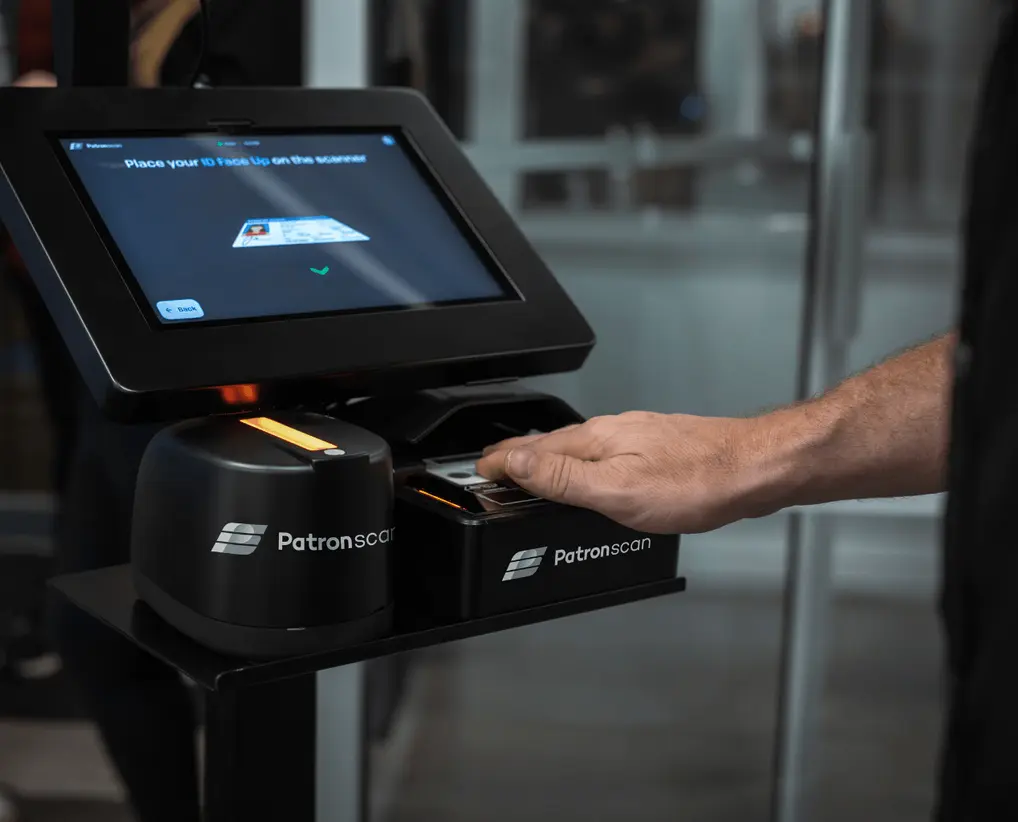
Patronscan is built to do exactly what Arizona’s affirmative-defense law rewards, and to do it in seconds at the door:
Book a DemoVerify real IDs and catch fakes
Validate IDs and flag fraudulent ones before a patron gets inside.
Create the record the law looks for.
Every scan produces the kind of electronic record A.R.S. § 4-241 recognizes as an acceptable form of recording identification.
Protect your license and your staff
Documented, consistent ID checks give your business the strongest footing if a minor ever presents a convincing fake.
Keep your venue safer
Flag patrons removed for violence or theft so they can’t simply move to the next venue.
Stay Compliant in Arizona
Arizona businesses trust Patronscan to make 100% ID verification fast, accurate, and defensible. Request a demo to see how Patronscan fits your operation, or get a quote today.
Frequently asked questions
Does scanning IDs protect my business legally?
It can. Examining and keeping a record of a customer’s ID, including an electronic record from a scanning device, provides an affirmative defense under A.R.S. § 4-241, unless your staff knew the person was underage.
What's the fine for selling alcohol to a minor in Arizona?
Selling or furnishing alcohol to someone under 21 is a Class 1 misdemeanor, punishable by up to six months in jail and a fine of up to $2,500 (plus surcharges), in addition to possible liquor-license penalties from the DLLC.
Is using a fake ID a crime in Arizona?
Yes. Using or possessing a fraudulent ID to misrepresent age and obtain alcohol or enter a bar is a Class 1 misdemeanor under A.R.S. § 4-241.
Can I keep the data from scanned IDs?
Arizona allows retailers to retain and use ID information for specific purposes such as age verification, identity confirmation, and fraud prevention, subject to the federal Driver’s Privacy Protection Act. You should not sell or misuse the data.